SPRACX3 October 2021 F28377D-SEP , F29H850DM , F29H850TU , F29H859TU-Q1 , F29P329SM-Q1 , F29P589DM-Q1 , F29P589DU-Q1 , TMS320F2800132 , TMS320F2800133 , TMS320F2800135 , TMS320F2800137 , TMS320F2800152-Q1 , TMS320F2800153-Q1 , TMS320F2800154-Q1 , TMS320F2800155 , TMS320F2800155-Q1 , TMS320F2800156-Q1 , TMS320F2800157 , TMS320F2800157-Q1 , TMS320F280021 , TMS320F280021-Q1 , TMS320F280023 , TMS320F280023-Q1 , TMS320F280023C , TMS320F280025 , TMS320F280025-Q1 , TMS320F280025C , TMS320F280025C-Q1 , TMS320F280033 , TMS320F280034 , TMS320F280034-Q1 , TMS320F280036-Q1 , TMS320F280036C-Q1 , TMS320F280037 , TMS320F280037-Q1 , TMS320F280037C , TMS320F280037C-Q1 , TMS320F280038-Q1 , TMS320F280038C-Q1 , TMS320F280039 , TMS320F280039-Q1 , TMS320F280039C , TMS320F280039C-Q1 , TMS320F280040-Q1 , TMS320F280040C-Q1 , TMS320F280041 , TMS320F280041-Q1 , TMS320F280041C , TMS320F280041C-Q1 , TMS320F280045 , TMS320F280048-Q1 , TMS320F280048C-Q1 , TMS320F280049 , TMS320F280049-Q1 , TMS320F280049C , TMS320F280049C-Q1 , TMS320F28075 , TMS320F28075-Q1 , TMS320F28076 , TMS320F28374D , TMS320F28374S , TMS320F28375D , TMS320F28375S , TMS320F28375S-Q1 , TMS320F28376D , TMS320F28376S , TMS320F28377D , TMS320F28377D-EP , TMS320F28377D-Q1 , TMS320F28377S , TMS320F28377S-Q1 , TMS320F28378D , TMS320F28378S , TMS320F28379D , TMS320F28379D-Q1 , TMS320F28379S , TMS320F28384D , TMS320F28384D-Q1 , TMS320F28384S , TMS320F28384S-Q1 , TMS320F28386D , TMS320F28386D-Q1 , TMS320F28386S , TMS320F28386S-Q1 , TMS320F28388D , TMS320F28388S , TMS320F28P550SG , TMS320F28P550SJ , TMS320F28P559SG-Q1 , TMS320F28P559SJ-Q1 , TMS320F28P650DH , TMS320F28P650DK , TMS320F28P650SH , TMS320F28P650SK , TMS320F28P659DH-Q1 , TMS320F28P659DK-Q1 , TMS320F28P659SH-Q1
- Trademarks
- 1 Introduction
- 2 Getting Started With C2000 SysConfig
- 3 C2000 SysConfig Overview
- 4 SysConfig Generated Files After the Project is Built
- 5 Application Code Based on C2000 SysConfig Initialization
- 6 Interrupt Support
- 7 Device-Specific Code Generation
- 8 Adding C2000 SysConfig Support to Existing Projects
- 9 Remove C2000 SysConfig Support from Projects
- 10Standalone SysConfig Tool
- 11Summary
- 12References
1 Introduction
C2000™ SysConfig is a graphical user interface (GUI) tool that allows you to configure your C2000 Real-Time Control MCUs. The following are the features supported in the tool:
- System initialization code generation: C2000 SysConfig generates initialization code for the C2000 device including peripheral initialization, interrupt initialization, PinMux initialization, and so forth.
- Device PinMux visualization: A visual representation of the device and all of its pins, a list of all possible PinMux options, your selected mode for each pin, and a summary PinMux CSV file is supported by the tool.
- Error detection: C2000 SysConfig is capable of catching configuration errors and notifying you of the incorrect setup.
- Device level dependency identification: C2000 SysConfig identifies the dependencies in the device and ensures that the dependent peripherals are all configured by you.
- Device level error detection: Device level configuration errors caused by dependent peripherals are caught and you are notified of the error.
- Portable device initialization:
Device initialization settings are portable between device families and device
packages.Note: The device families supported are:
- F2807x, F2837xS, F2837xD
- F28004x
- F2838x
- F28002x
- F28003x
- Seamless support for other tools: Support for other SysConfig tools such as CLB Tool and the DCSM Tool.
C2000 SysConfig is available inside C2000Ware and requires the SysConfig Tool, which is delivered built-in with Code Composer Studio™ (CCS) IDE and is also delivered as a standalone tool for use with other IDEs.
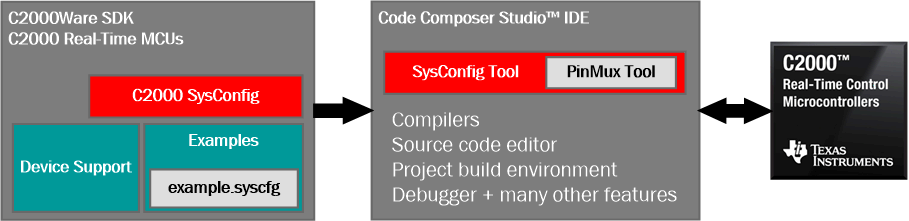 Figure 1-1 C2000 SysConfig Overview