SNVSCF2 November   2025 LM65680

PRODUCTION DATA  

  1.   1
  2. Features
  3. Applications
  4. Description
  5. Related Products
  6. Pin Configuration and Functions
    1. 5.1 Wettable Flanks
    2. 5.2 Pinout Design for Clearance and FMEA
  7. Specifications
    1. 6.1 Absolute Maximum Ratings
    2. 6.2 ESD Ratings
    3. 6.3 Recommended Operating Conditions
    4. 6.4 Thermal Information
    5. 6.5 Electrical Characteristics
    6. 6.6 Typical Characteristics
  8. Detailed Description
    1. 7.1 Overview
    2. 7.2 Functional Block Diagram
    3. 7.3 Feature Descriptions
      1. 7.3.1  Input Voltage Range (VIN1, VIN2)
      2. 7.3.2  High-Voltage Bias Supply Subregulator (VCC, BIAS)
      3. 7.3.3  Precision Enable and Adjustable Input Voltage UVLO (EN/UVLO)
      4. 7.3.4  Output Voltage Setpoint (FB, BIAS)
      5. 7.3.5  Switching Frequency (RT)
      6. 7.3.6  Mode Selection and Clock Synchronization (MODE/SYNC)
        1. 7.3.6.1 Clock Synchronization
        2. 7.3.6.2 Clock Locking
      7. 7.3.7  Device Configuration (CNFG/SYNCOUT)
      8. 7.3.8  Dual-Random Spread Spectrum (DRSS)
      9. 7.3.9  High-Side MOSFET Gate Drive (BST)
      10. 7.3.10 Configurable Soft Start (SS)
        1. 7.3.10.1 Recovery From Dropout
      11. 7.3.11 Protection Features
        1. 7.3.11.1 Power-Good Monitor (PG)
        2. 7.3.11.2 Overcurrent and Short-Circuit Protection
        3. 7.3.11.3 Hiccup-Mode Protection
        4. 7.3.11.4 Thermal Shutdown
      12. 7.3.12 Two-Phase, Single-Output Operation
    4. 7.4 Device Functional Modes
      1. 7.4.1 Shutdown Mode
      2. 7.4.2 Active Mode
  9. Application and Implementation
    1. 8.1 Application Information
      1. 8.1.1 Power Train Components
        1. 8.1.1.1 Buck Inductor
        2. 8.1.1.2 Output Capacitors
        3. 8.1.1.3 Input Capacitors
        4. 8.1.1.4 EMI Filter
      2. 8.1.2 Error Amplifier and Compensation
      3. 8.1.3 Maximum Ambient Temperature
        1. 8.1.3.1 Derating Curves
    2. 8.2 Typical Applications
      1. 8.2.1 Design 1 – 5V, 8A Synchronous Buck Regulator With Wide Input Voltage Range and High Efficiency
        1. 8.2.1.1 Design Requirements
        2. 8.2.1.2 Detailed Design Procedure
          1. 8.2.1.2.1  Custom Design With WEBENCH® Tools
          2. 8.2.1.2.2  Choosing the Switching Frequency
          3. 8.2.1.2.3  Buck Inductor Selection
          4. 8.2.1.2.4  Input Capacitor Selection
          5. 8.2.1.2.5  Output Capacitors
          6. 8.2.1.2.6  Output Voltage Setpoint
          7. 8.2.1.2.7  Compensation Components
          8. 8.2.1.2.8  Setting the Input Voltage UVLO
          9. 8.2.1.2.9  EMI Mitigation, RDRSS
          10. 8.2.1.2.10 Bootstrap Capacitor, CBST
        3. 8.2.1.3 Application Curves
      2.      Design 2 – High Efficiency, 48V to 12V, 400kHz Synchronous Buck Regulator
        1. 8.2.2.1 Design Requirements
        2. 8.2.2.2 Detailed Design Procedure
          1. 8.2.2.2.1 Buck Inductor Selection
          2. 8.2.2.2.2 Input Capacitor Selection
          3. 8.2.2.2.3 Output Capacitors
          4. 8.2.2.2.4 Output Voltage Setpoint
          5. 8.2.2.2.5 Compensation Components
          6. 8.2.2.2.6 Feedforward Capacitor
          7. 8.2.2.2.7 Soft-Start Capacitor
        3. 8.2.2.3 Application Curves
    3. 8.3 Best Design Practices
    4. 8.4 Power Supply Recommendations
    5. 8.5 Layout
      1. 8.5.1 Layout Guidelines
        1. 8.5.1.1 Thermal Design and Layout
      2. 8.5.2 Layout Example
  10. Device and Documentation Support
    1. 9.1 Device Support
      1. 9.1.1 Third-Party Products Disclaimer
      2. 9.1.2 Development Support
        1. 9.1.2.1 Custom Design With WEBENCH® Tools
    2. 9.2 Documentation Support
      1. 9.2.1 Related Documentation
        1. 9.2.1.1 Low-EMI Design Resources
        2. 9.2.1.2 Thermal Design Resources
        3. 9.2.1.3 Multiphase Design Resources
        4. 9.2.1.4 PCB Layout Resources
    3. 9.3 Receiving Notification of Documentation Updates
    4. 9.4 Support Resources
    5. 9.5 Trademarks
    6. 9.6 Electrostatic Discharge Caution
    7. 9.7 Glossary
  11. 10Revision History
  12. 11Mechanical, Packaging, and Orderable Information

封装选项

机械数据 (封装 | 引脚)
散热焊盘机械数据 (封装 | 引脚)
订购信息

Application Curves

Unless otherwise specified, VIN = 48V, VOUT = 5V, IOUT = 8A, FSW = 400kHz, TA = 25°C, FPWM.

LO = 3.3μH
Figure 8-8 Efficiency vs IOUT
LM65680 No-Load Input
            Current
AUTO mode External compensation LO = 5.6μH
Figure 8-10 No-Load Input Current
LM65680 Full-Load
            Switching
Figure 8-12 Full-Load Switching
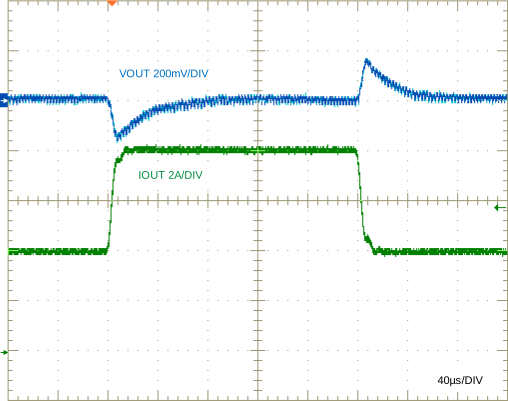
LM65680 Load Transient
            Response, 4A to 8A
Figure 8-14 Load Transient Response, 4A to 8A
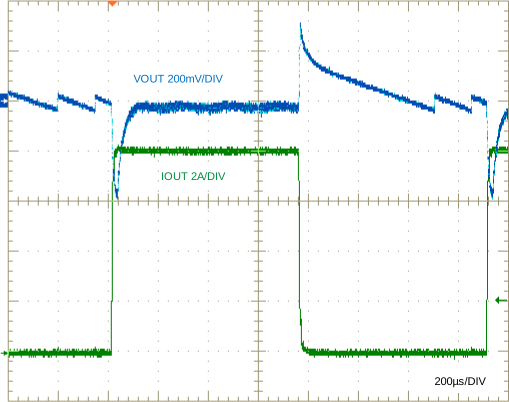
LM65680 Load Transient
            Response, 0A to 8A
AUTO mode
Figure 8-16 Load Transient Response, 0A to 8A
LM65680 VIN
            Start-up Characteristic
VIN ramped at 10V/ms 0.62Ω load
Figure 8-18 VIN Start-up Characteristic
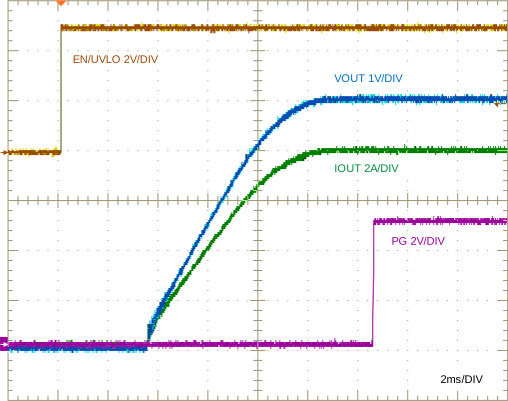
LM65680 Enable ON
            Characteristic
0.62Ω load
Figure 8-20 Enable ON Characteristic
LM65680 Hiccup in an
            Overload Condition
Figure 8-22 Hiccup in an Overload Condition
Orange: QPK detect
Blue: AVG detect
DRSS and SR Control ON
Figure 8-24 CISPR 11 Class B Conducted Emissions, 150kHz to 30MHz
LO = 5.6μH
Figure 8-9 Efficiency vs IOUT, AUTO
LO = 3.3μH
Figure 8-11 Output Voltage Behavior in Dropout
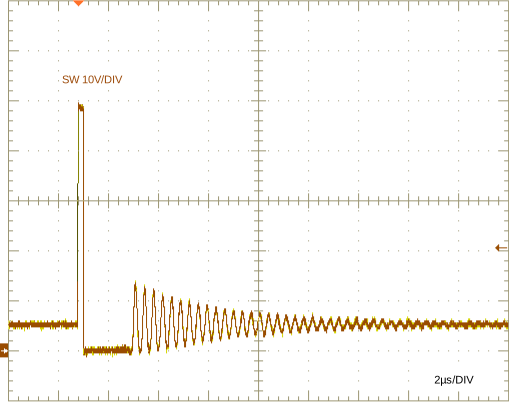
LM65680 No-Load
            Switching, AUTO
Figure 8-13 No-Load Switching, AUTO
LM65680 Load Transient
            Response, 0A to 8A
Figure 8-15 Load Transient Response, 0A to 8A
LM65680 VIN
            Start-up Characteristic
VIN stepped to 48V 0.62Ω load
Figure 8-17 VIN Start-up Characteristic
LM65680 VIN Shutdown Characteristic
0.62Ω load
Figure 8-19 VIN Shutdown Characteristic
LM65680 Enable OFF Characteristic
0.62Ω load
Figure 8-21 Enable OFF Characteristic
LM65680 Recovery From an Overload Condition
Figure 8-23 Recovery From an Overload Condition
Figure 8-25 Thermal Performance, No Airflow