SPRT821 February 2026 TPS7A60-Q1 , TPS7A61-Q1 , TPS7A66-Q1 , TPS7B69-Q1 , TPS7B81-Q1 , TPS7B82-Q1 , TPS7E66-Q1 , TPS7E67-Q1 , TPS7E81-Q1 , TPS7E82-Q1
Introduction
In modern cars, many systems are always on – such as anti-theft, key-less entry, emergency calling, tire pressure monitoring systems (TMPS), modules containing housekeeping microcontrollers (MCUs) and controller area network (CANs) and so on. The MCUs and/or CAN transceivers continuously monitor and communicate within various sub-systems in these applications. These loads often require a clean and noise free power supply with low ripple. LDOs are a preferred choice for providing the supply due to small size and simple design. The LDOs that power these always on loads are required to consume very low current at light load conditions to avoid draining the battery when the ignition is not engaged. The acceptable current consumption per module could be as low as tens of μA. Therefore, it is crucial that the LDO consumes very minimum current from the battery for increased battery life. An example of an LDO powering up an MCU in such systems is shown in Figure 1.
 Figure 1 Low IQ LDO Powering
MCUs/CANs
Figure 1 Low IQ LDO Powering
MCUs/CANsTexas Instruments has a comprehensive portfolio for AEC-Q100 qualified, low quiescent current (IQ) LDOs which are preferred for powering always-on loads in standby systems and are designed to connect directly to the 12V automotive battery. Table 1 lists the latest low IQ devices with current rating, features, and package options highlighted.
| Generic Part Number | Output Current (mA) | Adjustable Output Voltage | Fixed Output Voltage Range | Power Good with Delay | Packages |
|---|---|---|---|---|---|
| TPS7E81-Q1 | 150 | Yes | 1.8V – 12V | No | SOT-23, WSON, HVSSOP |
| TPS7E82-Q1 | 300 | Yes | 1.8V – 12V | No | SOT-23, WSON, HVSSOP |
| TPS7E66-Q1 | 150 | Yes | 1.8V – 12V | Yes | WSON, HVSSOP |
| TPS7E67-Q1 | 300 | Yes | 1.8V – 12V | Yes | WSON, HVSSOP |
| TPS7B82-Q1 | 300 | No | 2.5V - 5V | No | HTSSOP, WSON, HVSSOP, TO-252 |
What are the package options for Low IQ LDOs?
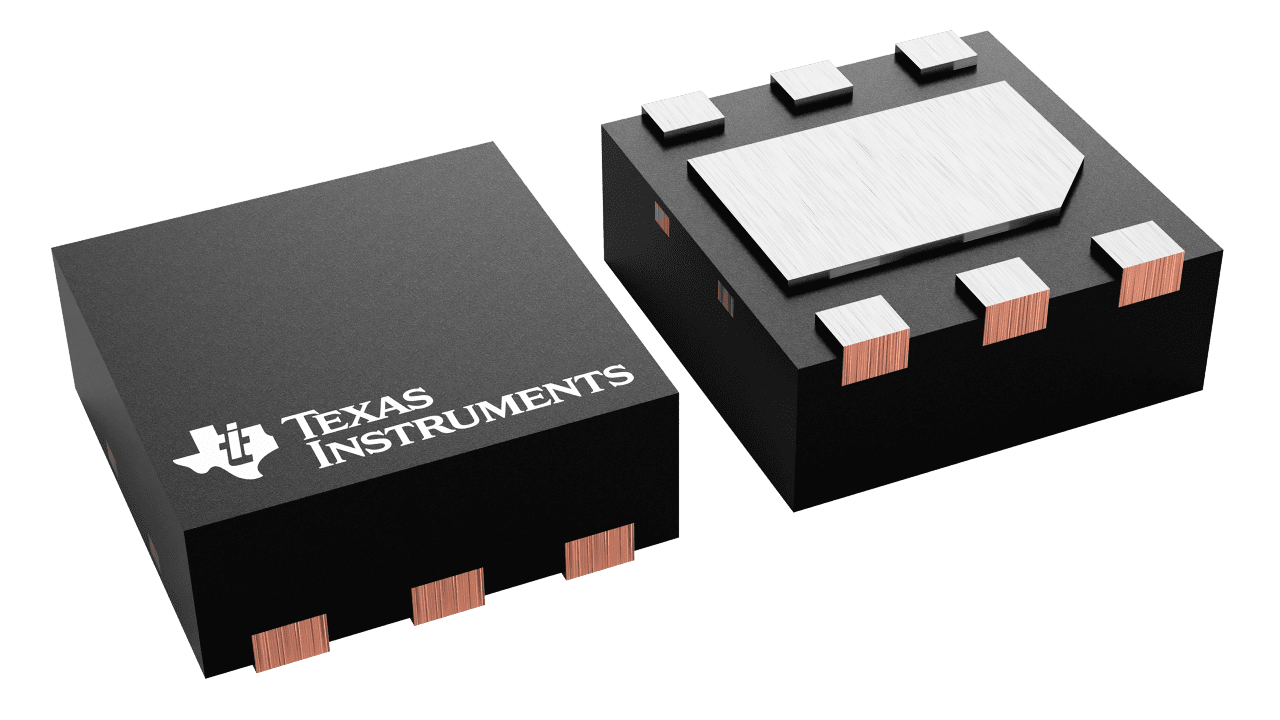
TI offers various package and pinout options for the automotive battery-connected low IQ LDOs which allows for greater flexibility in the device selection for thermally sensitive applications. The description and value proposition of each of the packages are listed in Table 2.
| Package (Pins) | WSON (6) | SOT-23 (5) | HVSSOP (8) | TO-252 (5) |
|---|---|---|---|---|
| Size (mm) (l ×w) | 2 × 2 | 2.9 × 2.8 | 3 × 4.9 | 10.1 × 6.6 |
| Thermal Range (Rtheta JA°C/W) | 70-90 | 180-190 | 60-65 | 35-39 |
| Value Proposition | Smallest size | Industry standard | Good thermals | Preferred thermals |
 |
 |
 |
 |
How to select the right Low IQ LDO?
The selection of the device primarily depends on the output current, input/output voltage ratings, feature requirements, package and pinout preference.
Table 3 highlights the various features of the automotive battery-connected low IQ LDOs.
| Devices and Features | TPS7E81-Q1 TPS7E82-Q1 |
TPS7E66-Q1 TPS7E67-Q1 |
TPS7B82-Q1 |
|---|---|---|---|
| Wider Output Voltage Range (18V and above) | ✔ | ✔ | |
| Better Accuracy (< 1.5%) | ✔ | ✔ | |
| Power Good with Programmable Delay | ✔ | ||
| Thermals (Rtheta JA~30-40°C/W) | ✔ | ||
| Extended Junction Temperature (Grade 0) | ✔ |
What are the feature sets provided by Low IQ LDOs?
Adjustable Feedback Voltage
TPS7E81-Q1, TPS7E82-Q1, TPS7E66-Q1 and TPS7E67-Q1 offer an adjustable version which can be used to achieve output voltages up to 38V. The adjustable version requires external feedback divider resistors, R1 and R2, to set the output voltage (VOUT).
VOUT can be calculated using equation 1 and the schematic is shown in Figure 2 .
For the adjustable-voltage version device, a feed-forward capacitor (CFF) can be connected from the OUT pin to the FB pin. CFF improves transient, noise, and PSRR performance, but is not required for regulator stability (shown in dotted line in Figure 2).
 Figure 2 Using Feedback Resistors to Set the
Output Voltage
Figure 2 Using Feedback Resistors to Set the
Output VoltagePower Good and Delay
TPS7E66-Q1 and TPS7E67-Q1 have integrated Power Good (PG) feature for monitoring the output voltage. By connecting a pull-up resistor to the LDO output, any downstream device can receive PG as a logic signal that can be used for either power sequencing or resetting the microcontroller.
The HVSSOP package for both TPS7E66-Q1 and TPS7E67-Q1 offers an additional PG delay functionality where the PG reset delay can be adjusted by using external capacitors. This enables the user to control the power-on reset (POR) delay or the PG response time, ensuring the LDO stabilizes before downstream devices are fully active, preventing false resets from brief power supply glitches. Figure 3 shows a typical timing diagram for the power-good delay pin. See the respective datasheets for more details.
 Figure 3 Typical Power-Good Timing
Diagram
Figure 3 Typical Power-Good Timing
DiagramOutput Voltage Dropout Recovery
Dropout recovery refers to the response of the output voltage after exiting dropout operation. For most LDOs in dropout, the output voltage tracks the input voltage for a finite amount of time as the input voltage rises and exits the dropout region. This can lead to overshoot of the output voltage which can damage the downstream load. A poor dropout recovery behavior for LDO is shown in Figure 4 (at slew rate 2V/μs, 100mA load).
The drop out recovery becomes more critical in automotive applications during cold crank conditions when the battery voltage falls below than the nominal output voltage of the LDO, putting the voltage into dropout.
 Figure 4 Poor VOUT Recovery During
Drop Out Conditions (VIN = 10.5V, 2V/μs)
Figure 4 Poor VOUT Recovery During
Drop Out Conditions (VIN = 10.5V, 2V/μs)TPS7E81-Q1, TPS7E82-Q1, TPS7E66-Q1 and TPS7E67-Q1 have a unique architecture in which the output voltage stabilizes to the desired value after exiting the drop out operation with minimal overshoot.
Figure 5 shows a typical behavior of the output voltage (VOUT) when the falling input voltage (VIN) puts the LDO into dropout before recovering (at slew rate 2V/μs, 100mA load). The amount of overshoot is only a few mV in this case.
 Figure 5 Controlled VOUT Recovery
During Drop Out Conditions (VIN = 12V, 2V/μs)
Figure 5 Controlled VOUT Recovery
During Drop Out Conditions (VIN = 12V, 2V/μs)TI offers a very comprehensive and robust portfolio for AEC-Q100 qualified, battery connected Low IQ LDOs. The various package and pin out options allow for greater flexibility in device selection. Table 4 summarizes the latest devices in this family.
| Generic Part Number | Output Current (mA) | Adjustable Output Voltage | Fixed Output Voltage Range | Power Good | Power Good Delay | Packages | Thermals Rtheta JA (°C/W) |
|---|---|---|---|---|---|---|---|
| TPS7E81-Q1 | 150 | Yes (1.2V – 38V) |
1.8V – 12V | Yes | No | SOT-23-5 | 190.2 |
| TPS7E82-Q1 | 300 | WSON-6 | 90.2 | ||||
| Yes | HVSSOP-8 | 60.2 | |||||
| TPS7E66-Q1 | 150 | No | WSON-6 | 90.2 | |||
| Yes | HVSSOP-8 | 60.2 | |||||
| TPS7E67-Q1 | 300 | No | WSON-6 | 90.2 | |||
| Yes | HVSSOP-8 | 60.2 | |||||
| TPS7B82-Q1 | 300 | No | 2.5V – 5V | No | No | WSON-6 | 72.8 |
| HVSSOP-8 | 63.9 | ||||||
| TO-252-5 | 38.8 | ||||||
| HTSSOP-14 | 52 |
Learn more
Evaluate the Design
- TPS7E81/2-Q1: TPS7E8XQ1EVM-198
- TPS7E66/7-Q1: TPS7E6XQ1EVM-199
- TPS7B82-Q1: TPS7B8250EVM
- Leverage existing simulation models available in PSpice for TI
For additional assistance, ask questions to TI engineers on the TI E2E™ Power Management Support forum.