ZHCSE51 September 2015 TPS657095
PRODUCTION DATA.
- 1 特性
- 2 应用
- 3 说明
- 4 修订历史记录
- 5 Pin Configuration and Functions
- 6 Specifications
-
7 Detailed Description
- 7.1 Overview
- 7.2 Functional Block Diagram
- 7.3
Feature Description
- 7.3.1 State Diagram
- 7.3.2 Power-up Timing
- 7.3.3 GPO
- 7.3.4 GPIO
- 7.3.5 LED_EN
- 7.3.6 Minimum-On-Time Feature
- 7.3.7 PWM Dimming
- 7.3.8 Crystal Oscillator and CLKOUT
- 7.3.9 LDOs
- 7.3.10 Undervoltage Lockout
- 7.3.11 Power Up/Power Down Default States
- 7.3.12 Output Voltage Discharge for LDO1 and LDO2
- 7.3.13 Power-Good Status Bits for LDO1 and LDO2
- 7.3.14 Short-Circuit Protection
- 7.3.15 Thermal Shutdown
- 7.3.16 LED Driver
- 7.3.17 4kByte OTP Memory
- 7.4 Device Functional Modes
- 7.5 Programming
- 7.6
Register Map
- 7.6.1 DEV_AND_REV_ID Register Address: 00h
- 7.6.2 OTP_REV Register Address: 01h
- 7.6.3 GPIO_CTRL Register Address: 02h
- 7.6.4 PWM_OSC_CNTRL Register Address: 03h
- 7.6.5 ISINK_CURRENT Register Address: 04h
- 7.6.6 LDO_CTRL Register Address: 05h
- 7.6.7 LDO1_VCTRL Register Address: 06h
- 7.6.8 LDO2_VCTRL Register Address: 07h
- 7.6.9 PWM_DUTY_THR_L Register Address: 08h
- 7.6.10 PWM_DUTY_THR_H Register Address: 09h
- 7.6.11 MIN_ON_TIME_THR Register Address: 0Ah
- 7.6.12 PWM_DUTY_L Register Address: 0Bh
- 7.6.13 PWM_DUTY_H Register Address: 0Ch
- 7.6.14 MIN_ON_TIME Register Address: 0Dh
- 7.6.15 SPARE Register Address: 0Eh
- 7.6.16 4K_OTP_PASSWORD Register Address: 0Fh
- 8 Application and Implementation
- 9 Power Supply Recommendations
- 10Layout
- 11器件和文档支持
- 12机械、封装和可订购信息
8 Application and Implementation
NOTE
Information in the following applications sections is not part of the TI component specification, and TI does not warrant its accuracy or completeness. TI’s customers are responsible for determining suitability of components for their purposes. Customers should validate and test their design implementation to confirm system functionality.
8.1 Application Information
The target application for the TPS657095 device is powering an embedded camera module.
8.2 Typical Application
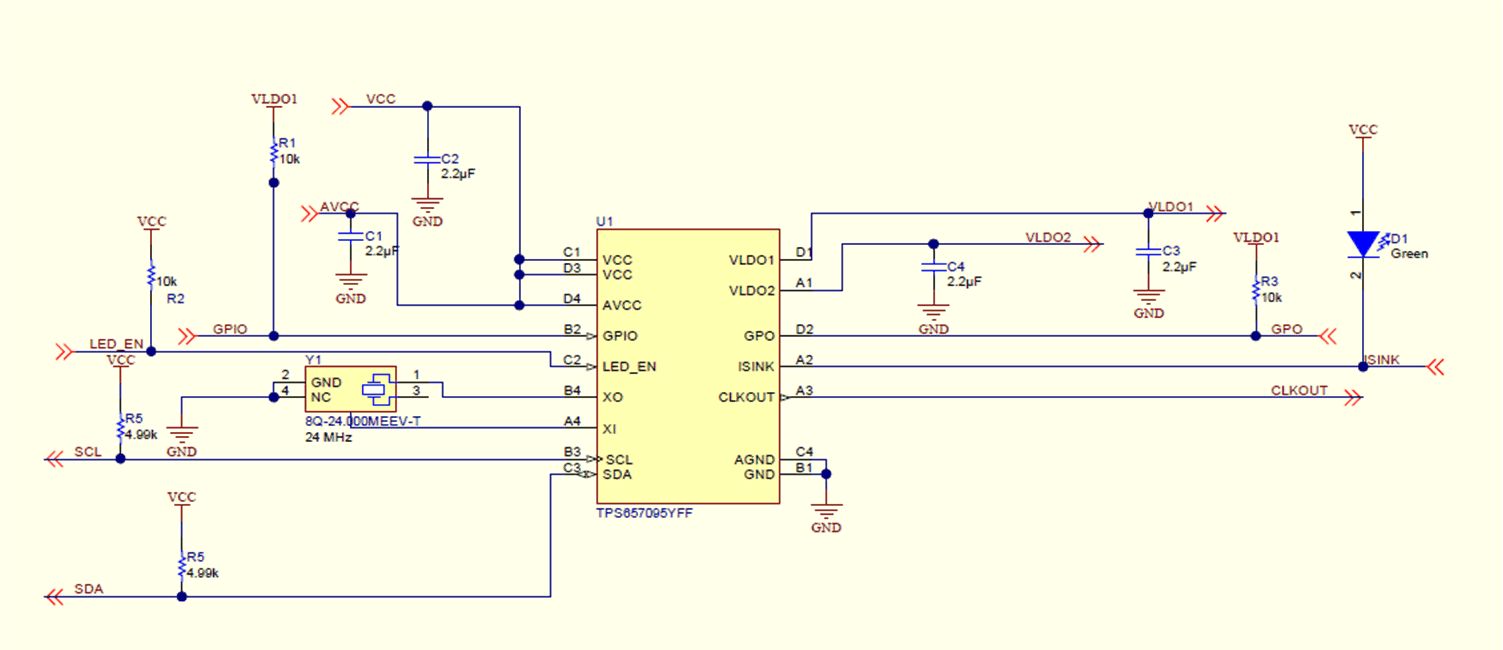 Figure 33. Application Schematic
8.2.1 Design Requirements
Table 20. Design Parameters
| DESIGN PARAMETER | VALUE |
|---|---|
| Typical Input Voltage | 5.0V |
| LDO1 Output Voltage | 1.8V (off by default) |
| LDO2 Output Voltage | 1.2V (off by default) |
8.2.2 Detailed Design Procedure
8.2.2.1 Output Capacitor Selection
The control loop of the LDOs is internally compensated such that they operate with small ceramic output capacitors of 2.2µF.
8.2.2.2 Input Capacitor Selection
A low ESR input capacitor is required for best input voltage filtering and minimizing the interference with other circuits. The LDOs need a ceramic input capacitor with a minimum capacitance of 1.0µF. The input capacitor can be increased without any limit for better input voltage filtering.
Table 21. Tested Capacitors
| TYPE | VALUE | VOLTAGE RATING | SIZE | SUPPLIER | MATERIAL |
|---|---|---|---|---|---|
| GRM155R60J225ME15D | 2.2 µF | 6.3 V | 0402 | Murata | Ceramic X5R |
| GRM185R60J225 | 2.2 µF | 6.3 V | 0603 | Murata | Ceramic X5R |
| GRM185R60J105K | 1 µF | 6.3 V | 0603 | Murata | Ceramic X5R |
8.2.3 Application Curves
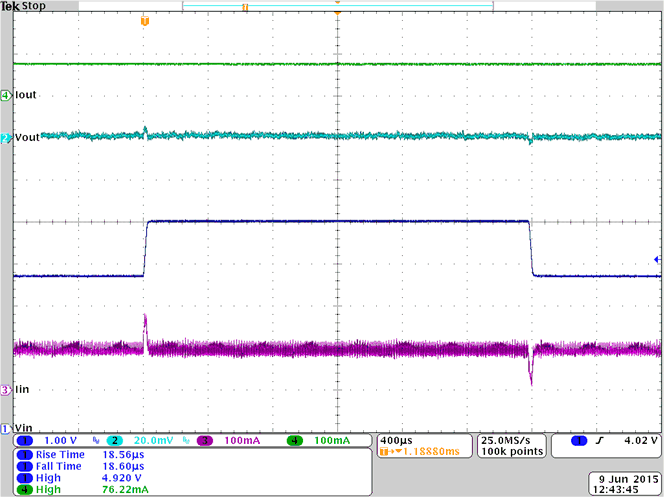
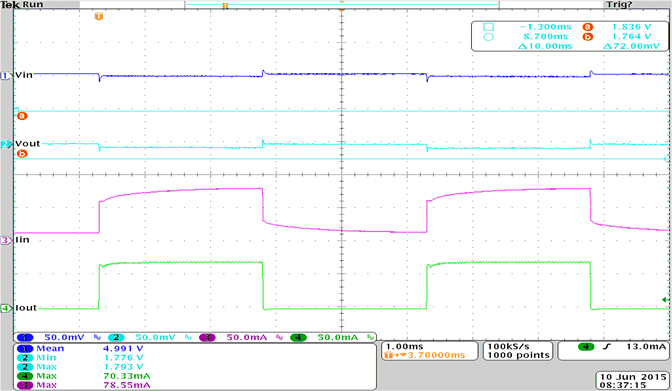
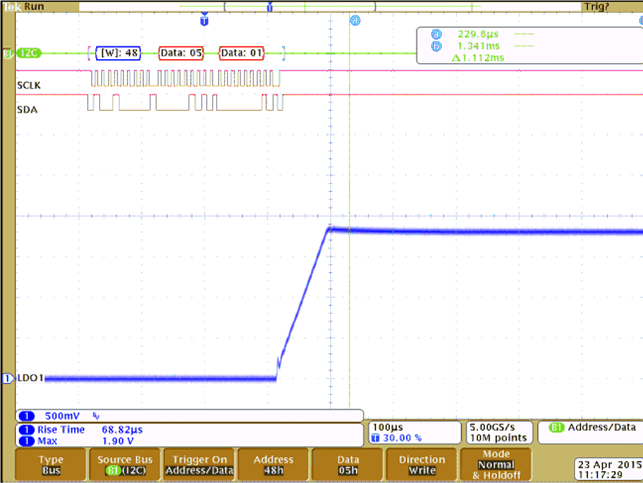
The graphs below were taken using the TPS657095EVM with the passive components as listed below:
- CIN(VCC) = GRM185R60J105K (1 µF / 6.3V)
- COUT(LDO1) = COUT(LDO2) = GRM185R60J225 (2.2 µF / 6.3 V)
- VCC = 5 V unless otherwise noted
Table 22. Table of Graphs
| DESCRIPTION | FIGURE | |
|---|---|---|
| Line Transient Response LDO1 | VCC = 3.6V to 5V to 3.6V; IOUT = 75mA; VOUT = 1.8V | Figure 34 |
| Line Transient Response LDO2 | VCC = 3.6V to 5V to 3.6V; IOUT = 75mA; VOUT = 2.8V | Figure 35 |
| Load Transient Response LDO1 | VCC = 5V; IOUT = 7.5mA to 68mA to 7.5mA; VOUT = 1.8V |
Figure 36 |
| Load Transient Response LDO2 | VCC = 5V; IOUT = 7.5mA to 68mA to 7.5mA; VOUT = 2.8V | Figure 37 |
| LDO1 and LDO2 Start-up Timing | VCC = 5V; IOUT = 0mA | Figure 38 |
| LDO1 and LDO2 Start-up Timing | VCC = 5V; IOUT = 75mA | Figure 39 |
| Duty Cycle on CLKout vs Programmed Frequency | VCC = 5V; f(crystal) = 24MHz; VLDO1 = 1.8V | Figure 40 |
| Period Jitter on CLKout vs Temperature and Output Frequency | VCC = 5V; f(crystal) = 24MHz; VLDO1 = 1.8V | Figure 41 |
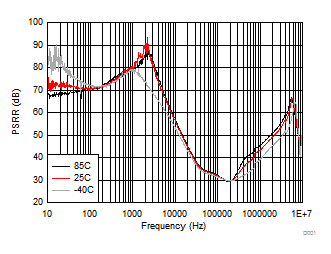
| VCC = 5 V, VLDO1 = 1.8 V, fCrystal = 24 MHz |
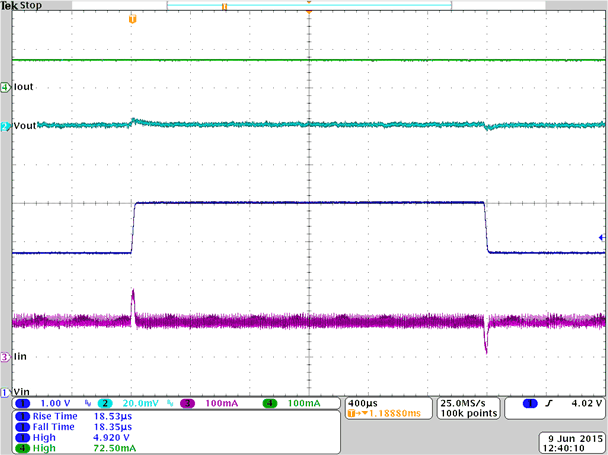
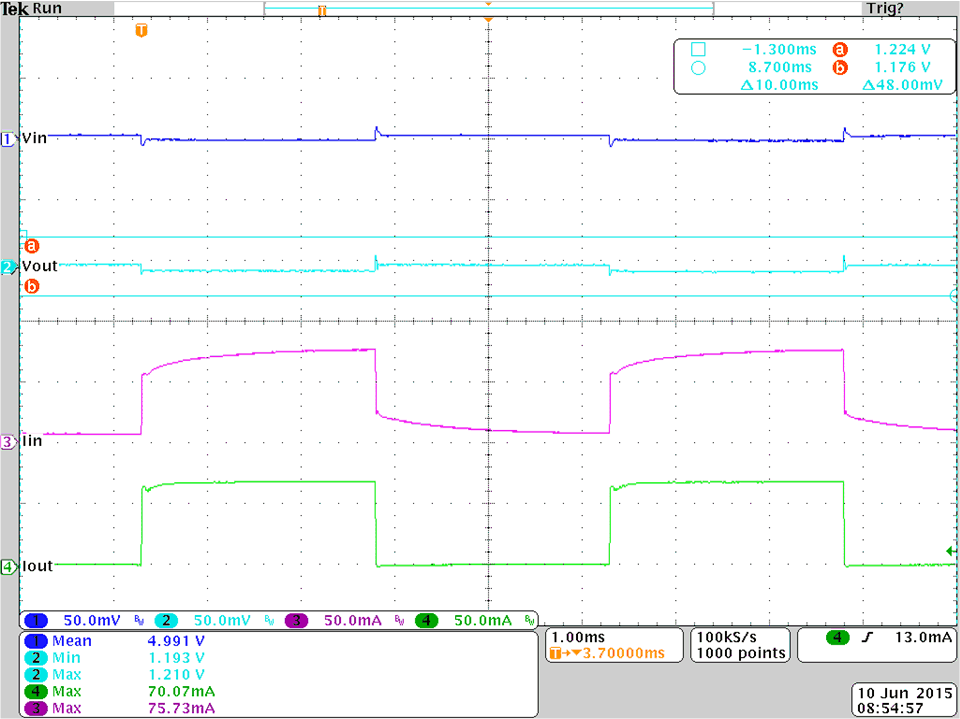
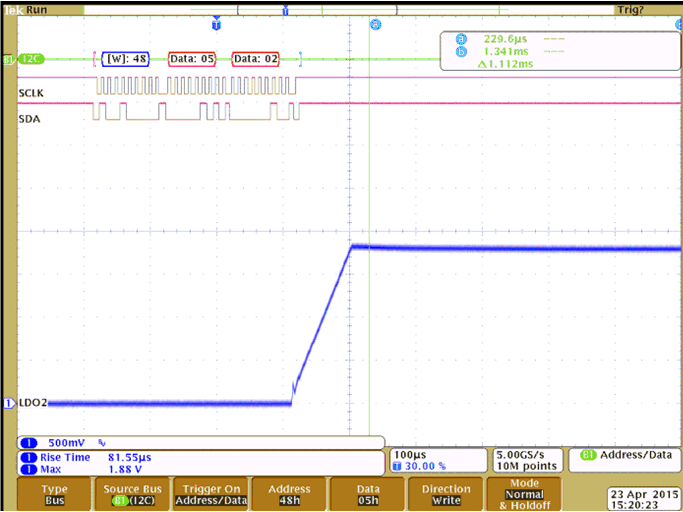
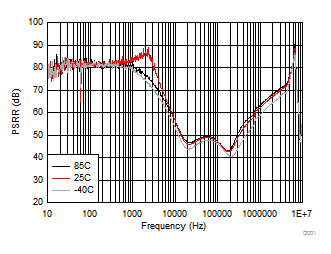
| VCC = 5 V |