at operating temperature TJ = 25°C,
VIN = VOUT(NOM) + 1.0 V or 2.5 V (whichever is greater),
IOUT = 1 mA, ON/OFF pin tied to VIN,
CIN = 1.0 µF, and COUT = 4.7 µF (unless otherwise
noted)
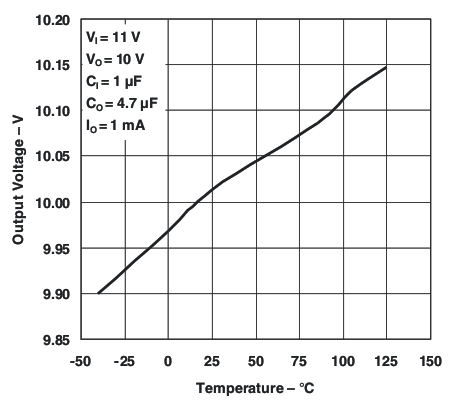 Figure 5-1 Output Voltage vs Temperature for Legacy Chip
| VIN = 4.3 V, VOUT = 3.3
V (for new chip) |
Figure 5-3 Output Voltage vs Temperature for New Chip Figure 5-5 Dropout Voltage vs
Temperature for New Chip
Figure 5-5 Dropout Voltage vs
Temperature for New Chip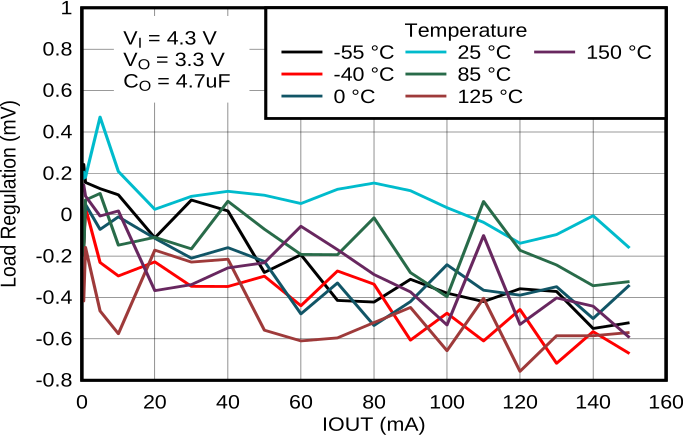 Figure 5-7 Output Regulation vs Load
Current for New Chip
Figure 5-7 Output Regulation vs Load
Current for New Chip Figure 5-9 Short-Circuit Current vs Time for Legacy Chip
 Figure 5-11 Short-Circuit Current vs Time for Legacy Chip
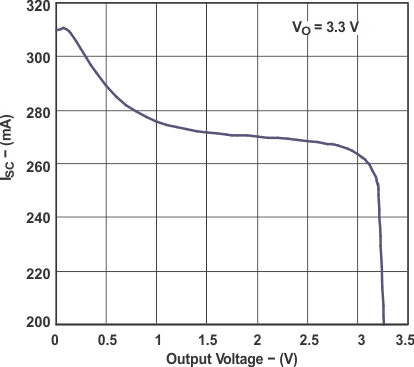 Figure 5-13 Short-Circuit Current vs Output Voltage for Legacy Chip
 Figure 5-15 Short-Circuit Current vs
Temperature for New Chip
Figure 5-15 Short-Circuit Current vs
Temperature for New Chip Figure 5-17 Ground Pin Current vs Load
Current for New Chip
Figure 5-17 Ground Pin Current vs Load
Current for New Chip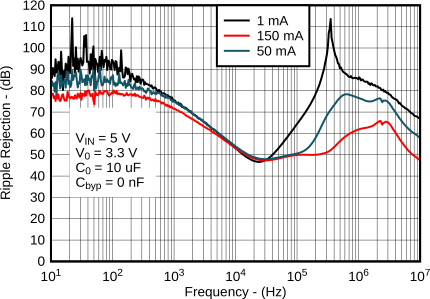
| VIN = 5 V, VOUT = 3.3 V,
COUT = 10 μF, CBYP = 0
nF |
Figure 5-19 Ripple Rejection vs
Frequency for New Chip
| VIN = 3.7 V, VOUT = 3.3 V,
COUT = 10 μF, CBYP = 0
nF |
Figure 5-21 Ripple Rejection vs
Frequency for New Chip Figure 5-23 Ripple Rejection vs
Frequency for New Chip
Figure 5-23 Ripple Rejection vs
Frequency for New Chip Figure 5-25 Ripple Rejection vs
Frequency for New Chip
Figure 5-25 Ripple Rejection vs
Frequency for New Chip Figure 5-27 Output Impedance vs Frequency for Legacy Chip
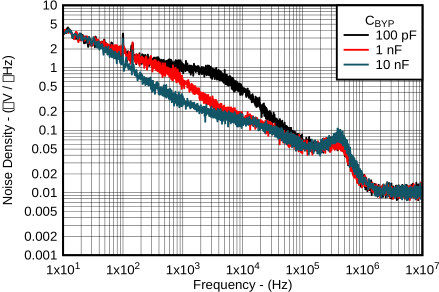 Figure 5-29 Output Noise Density vs
Frequency for New Chip
Figure 5-29 Output Noise Density vs
Frequency for New Chip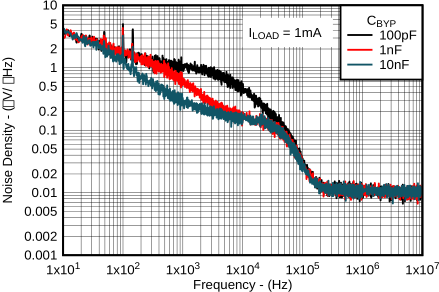 Figure 5-31 Output Noise Density vs
Frequency for New Chip
Figure 5-31 Output Noise Density vs
Frequency for New Chip Figure 5-33 Input Current vs Input
Voltage for New Chip
Figure 5-33 Input Current vs Input
Voltage for New Chip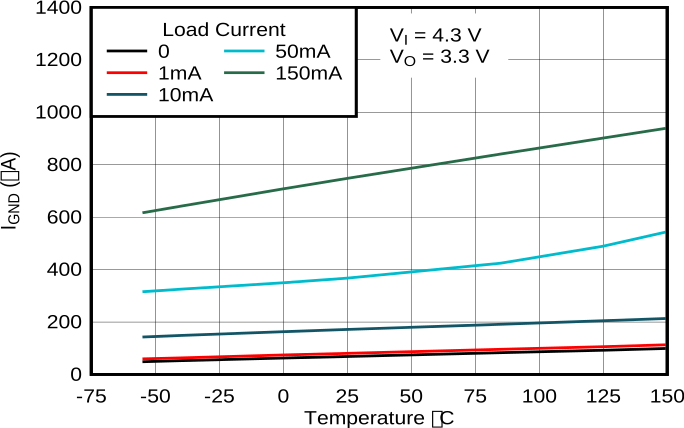 Figure 5-35 Ground-Pin Current vs Temperature for New Chip
 Figure 5-37 4.7-μF Stable ESR Range for Output Voltage ≤ 2.3 V for Legacy Chip
 Figure 5-2 Output Voltage vs Temperature for Legacy Chip
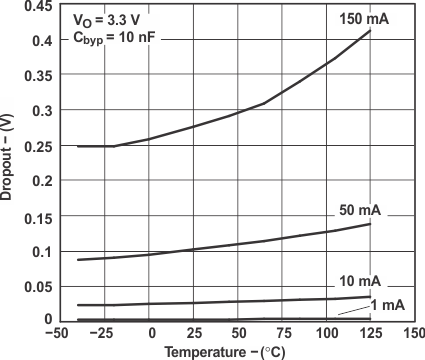 Figure 5-4 Dropout Voltage vs Temperature for Legacy Chip
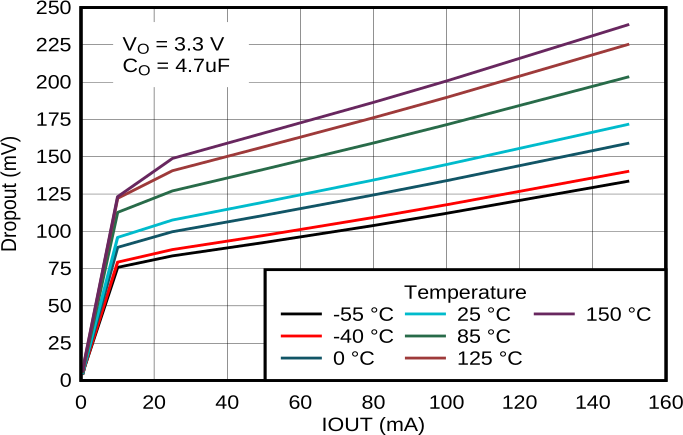 Figure 5-6 Dropout Voltage vs Load
Current for New Chip
Figure 5-6 Dropout Voltage vs Load
Current for New Chip Figure 5-8 Output Regulation vs Input
Voltage for New Chip
Figure 5-8 Output Regulation vs Input
Voltage for New Chip Figure 5-10 Short-Circuit Current vs
Time for New Chip
Figure 5-10 Short-Circuit Current vs
Time for New Chip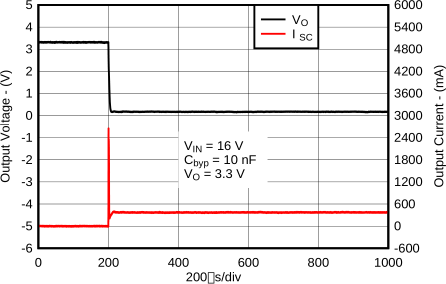 Figure 5-12 Short-Circuit Current vs
Time for New Chip
Figure 5-12 Short-Circuit Current vs
Time for New Chip Figure 5-14 Short-Circuit Current vs
Output Voltage for New Chip
Figure 5-14 Short-Circuit Current vs
Output Voltage for New Chip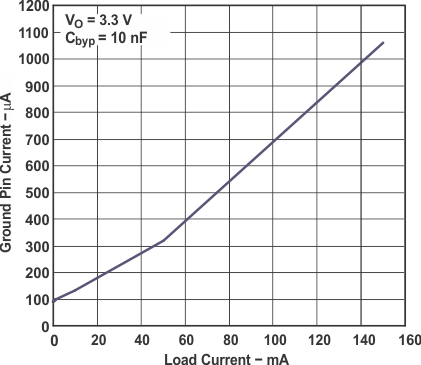 Figure 5-16 Ground Pin Current vs Load Current for Legacy Chip
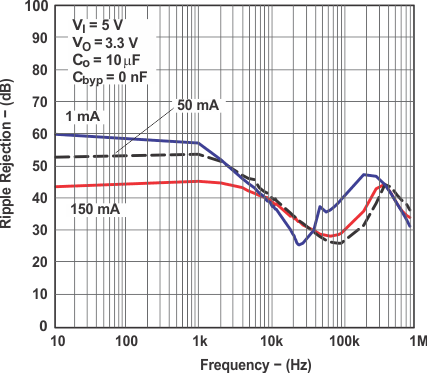 Figure 5-18 Ripple Rejection vs Frequency for Legacy Chip
 Figure 5-20 Ripple Rejection vs Frequency for Legacy Chip
 Figure 5-22 Ripple Rejection vs Frequency for Legacy Chip
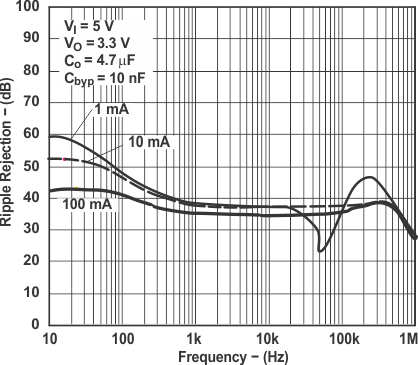 Figure 5-24 Ripple Rejection vs Frequency for Legacy Chip
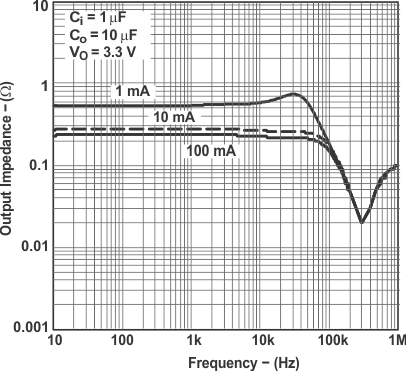 Figure 5-26 Output Impedance vs Frequency for Legacy Chip
 Figure 5-28 Output Noise Density vs Frequency for Legacy Chip
 Figure 5-30 Output Noise Density vs Frequency for Legacy Chip
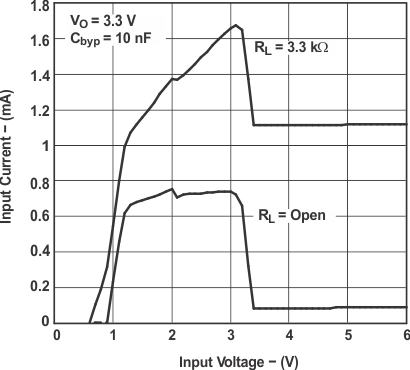 Figure 5-32 Input
Current vs Input Voltage for Legacy Chip
Figure 5-32 Input
Current vs Input Voltage for Legacy Chip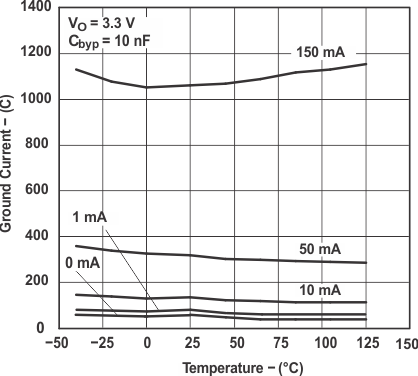 Figure 5-34 Ground-Pin Current vs Temperature for Legacy Chip
 Figure 5-36 2.2-μF Stable ESR Range for Output Voltage ≤ 2.3 V for Legacy Chip
 Figure 5-38 2.2-μF, 3.3-μF Stable ESR Range for Output Voltage ≥ 2.5 V for Legacy
Chip
Figure 5-38 2.2-μF, 3.3-μF Stable ESR Range for Output Voltage ≥ 2.5 V for Legacy
Chip