ZHCS964E February 2012 – September 2015 DAC34SH84
PRODUCTION DATA.
- 1 特性
- 2 应用范围
- 3 说明
- 4 修订历史记录
- 5 Pin Configuration and Functions
-
6 Specifications
- 6.1 Absolute Maximum Ratings
- 6.2 ESD Ratings
- 6.3 Recommended Operating Conditions
- 6.4 Thermal Information
- 6.5 Electrical Characteristics - DC Specifications
- 6.6 Electrical Characteristics - Digital Specifications
- 6.7 Electrical Characteristics - AC Specifications
- 6.8 Timing Requirements - Digital Specifications
- 6.9 Switching Characteristics - AC Specifications
- 6.10 Typical Characteristics
-
7 Detailed Description
- 7.1 Overview
- 7.2 Functional Block Diagram
- 7.3
Feature Description
- 7.3.1 Serial Interface
- 7.3.2 Data Interface
- 7.3.3 Data Format
- 7.3.4 Input FIFO
- 7.3.5 FIFO Modes of Operation
- 7.3.6 Clocking Modes
- 7.3.7 FIR Filters
- 7.3.8 Complex Signal Mixer
- 7.3.9 Quadrature Modulation Correction (QMC)
- 7.3.10 Temperature Sensor
- 7.3.11 Data Pattern Checker
- 7.3.12 Parity Check Test
- 7.3.13 DAC34SH84 Alarm Monitoring
- 7.3.14 LVPECL Inputs
- 7.3.15 LVDS Inputs
- 7.3.16 CMOS Digital Inputs
- 7.3.17 Reference Operation
- 7.3.18 DAC Transfer Function
- 7.3.19 Analog Current Outputs
- 7.4 Device Functional Modes
- 7.5 Programming
- 7.6 Register Map
- 8 Application and Implementation
- 9 Power Supply Recommendations
- 10Layout
- 11器件和文档支持
- 12机械、封装和可订购信息
6 Specifications
6.1 Absolute Maximum Ratings
over operating free-air temperature range (unless otherwise noted)(1)| MIN | MAX | UNIT | ||
|---|---|---|---|---|
| Supply voltage range(2) | DACVDD, DIGVDD, CLKVDD | –0.5 | 1.5 | V |
| VFUSE | –0.5 | 1.5 | V | |
| IOVDD, IOVDD2 | –0.5 | 4 | V | |
| AVDD, PLLAVDD | –0.5 | 4 | V | |
| Pin voltage range(2) | DAB[15..0]P/N, DCD[15..0]P/N, DATACLKP/N, ISTRP/N, PARITYCDP/N, SYNCP/N | –0.5 | IOVDD + 0.5 | V |
| DACCLKP/N, OSTRP/N | –0.5 | CLKVDD + 0.5 | V | |
| ALARM, SDO, SDIO, SCLK, SDENB, SLEEP, RESETB, TESTMODE, TXENA | –0.5 | IOVDD2 + 0.5 | V | |
| IOUTAP/N, IOUTBP/N, IOUTCP/N, IOUTDP/N | –1.0 | AVDD + 0.5 | V | |
| EXTIO, BIASJ | –0.5 | AVDD + 0.5 | V | |
| LPF | –0.5 | PLLAVDD + 0.5 | V | |
| Peak input current (any input) | 20 | mA | ||
| Peak total input current (all inputs) | –30 | mA | ||
| Absolute maximum junction temperature, TJ | 150 | °C | ||
| Storage temperature range, Tstg | –65 | 150 | °C | |
(1) Stresses beyond those listed under Absolute Maximum Ratings may cause permanent damage to the device. These are stress ratings only, and functional operation of these or any other conditions beyond those indicated under Recommended Operating Conditions is not implied. Exposure to absolute-maximum-rated conditions for extended periods may affect device reliability.
(2) Measured with respect to GND
6.2 ESD Ratings
| VALUE | UNIT | |||
|---|---|---|---|---|
| V(ESD) | Electrostatic discharge | Human-body model (HBM), per ANSI/ESDA/JEDEC JS-001(1) | ±2000 | V |
| Charged-device model (CDM), per JEDEC specification JESD22-C101(2) | ±500 | |||
(1) JEDEC document JEP155 states that 500-V HBM allows safe manufacturing with a standard ESD control process.
(2) JEDEC document JEP157 states that 250-V CDM allows safe manufacturing with a standard ESD control process.
6.3 Recommended Operating Conditions
| MIN | NOM | MAX | UNIT | ||
|---|---|---|---|---|---|
| TJ | Recommended operating junction temperature | 105 | °C | ||
| Maximum rated operating junction temperature(1) | 125 | ||||
| TA | Recommended free-air temperature | –40 | 25 | 85 | °C |
(1) Prolonged use at this junction temperature may increase the device failure-in-time (FIT) rate.
6.4 Thermal Information
| THERMAL METRIC(1) | DAC34SH84 | UNIT | |
|---|---|---|---|
| ZAY (NFBGA) | |||
| 196 PINS | |||
| RθJA | Junction-to-ambient thermal resistance | 37.6 | °C/W |
| RθJC(top) | Junction-to-case (top) thermal resistance | 6.8 | °C/W |
| RθJB | Junction-to-board thermal resistance | 16.8 | °C/W |
| ψJT | Junction-to-top characterization parameter | 0.2 | °C/W |
| ψJB | Junction-to-board characterization parameter | 16.4 | °C/W |
| RθJC(bot) | Junction-to-case (bottom) thermal resistance | NA | °C/W |
(1) For more information about traditional and new thermal metrics, see the Semiconductor and IC Package Thermal Metrics application report, SPRA953.
6.5 Electrical Characteristics – DC Specifications
over recommended operating free-air temperature range, nominal supplies, IOUTFS = 20 mA (unless otherwise noted)(1)| PARAMETER | TEST CONDITIONS | MIN | TYP | MAX | UNIT | |
|---|---|---|---|---|---|---|
| Resolution | 16 | Bits | ||||
| DC ACCURACY | ||||||
| DNL | Differential nonlinearity | 1 LSB = IOUTFS / 216 | ±2 | LSB | ||
| INL | Integral nonlinearity | ±4 | LSB | |||
| ANALOG OUTPUT | ||||||
| Coarse gain linearity | ±0.04 | LSB | ||||
| Offset error | Mid-code offset | ±0.001 | %FSR | |||
| Gain error | With external reference | ±2 | %FSR | |||
| With internal reference | ±2 | %FSR | ||||
| Gain mismatch | With internal reference | ±2 | %FSR | |||
| Full-scale output current | 10 | 20 | 30 | mA | ||
| Output compliance range | –0.5 | 0.6 | V | |||
| Output resistance | 300 | kΩ | ||||
| Output capacitance | 5 | pF | ||||
| REFERENCE OUTPUT | ||||||
| VREF | Reference output voltage | 1.2 | V | |||
| Reference output current(2) | 100 | nA | ||||
| REFERENCE INPUT | ||||||
| VEXTIO | Input voltage range | External reference mode | 0.6 | 1.2 | 1.25 | V |
| Input resistance | 1 | MΩ | ||||
| Small-signal bandwidth | 472 | kHz | ||||
| Input capacitance | 100 | pF | ||||
| TEMPERATURE COEFFICIENTS | ||||||
| Offset drift | ±1 | ppm / °C | ||||
| Gain drift | With external reference | ±15 | ppm / °C | |||
| With internal reference | ±30 | ppm / °C | ||||
| Reference voltage drift | ±8 | ppm / °C | ||||
| POWER SUPPLY(3) | ||||||
| AVDD, IOVDD, PLLAVDD | 3.14 | 3.3 | 3.46 | V | ||
| DIGVDD | 1.25 | 1.3 | 1.35 | V | ||
| CLKVDD, DACVDD | 1.3 | 1.35 | 1.4 | V | ||
| IOVDD2 | 1.71 | 3.3 | 3.45 | V | ||
| PSRR | Power-supply rejection ratio | DC tested | ±0.25 | %FSR / V | ||
| POWER CONSUMPTION | ||||||
| I(AVDD) | Analog supply current(4) | Mode 1 fDAC = 1.5 GSPS, 2× interpolation, mixer on, QMC on, invsinc on, PLL enabled, 20-mA FS output, IF = 200 MHz |
135 | 165 | mA | |
| I(DIGVDD) | Digital supply current | 885 | 950 | mA | ||
| I(DACVDD) | DAC supply current | 45 | 60 | mA | ||
| I(CLKVDD) | Clock supply current | 127 | 145 | mA | ||
| P | Power dissipation | 1828 | 2056 | mW | ||
| I(AVDD) | Analog supply current(4) | Mode 2 fDAC = 1.47456 GSPS, 2× interpolation, mixer on, QMC on, invsinc on, PLL disabled, 20-mA FS output, IF = 7.3 MHz |
115 | mA | ||
| I(DIGVDD) | Digital supply current | 770 | mA | |||
| I(DACVDD) | DAC supply current | 40 | mA | |||
| I(CLKVDD) | Clock supply current | 95 | mA | |||
| P | Power dissipation | 1562 | mW | |||
| I(AVDD) | Analog supply current(4) | Mode 3 fDAC = 737.28 MSPS, 2x interpolation, mixer on, QMC on, invsinc off, PLL disabled, 20-mA FS output, IF = 7.3 MHz |
115 | mA | ||
| I(DIGVDD) | Digital supply current | 470 | mA | |||
| I(DACVDD) | DAC supply current | 21 | mA | |||
| I(CLKVDD) | Clock supply current | 55 | mA | |||
| P | Power dissipation | 1093 | mW | |||
| I(AVDD) | Analog supply current(4) | Mode 4 fDAC = 1.47456 GSPS, 2× interpolation, mixer on, QMC on, invsinc on, PLL enabled, IF = 7.3 MHz, channels A/B/C/D output sleep |
40 | mA | ||
| I(DIGVDD) | Digital supply current | 710 | mA | |||
| I(DACVDD) | DAC supply current | 50 | mA | |||
| I(CLKVDD) | Clock supply current | 90 | mA | |||
| P | Power dissipation | 1160 | mW | |||
| I(AVDD) | Analog supply current(4) | Mode 5 Power-down mode: no clock, DAC on sleep mode (clock receiver sleep), channels A/B/C/D output sleep, static data pattern |
28 | mA | ||
| I(DIGVDD) | Digital supply current | 17 | mA | |||
| I(DACVDD) | DAC supply current | 0 | mA | |||
| I(CLKVDD) | Clock supply current | 20 | mA | |||
| P | Power dissipation | 142 | mW | |||
| I(AVDD) | Analog supply current(4) | Mode 6 fDAC = 1 GSPS, 2x interpolation, mixer off, QMC off, invsinc off, PLL enabled, 20-mA FS output, IF = 7.3 MHz |
130 | mA | ||
| I(DIGVDD) | Digital supply current | 570 | mA | |||
| I(DACVDD) | DAC supply current | 25 | mA | |||
| I(CLKVDD) | Clock supply current | 98 | mA | |||
| P | Power dissipation | 1336 | mA | |||
| I(AVDD) | Analog supply current(4) | Mode 7 fDAC = 1 GSPS, 2x interpolation, mixer off,QMC off, invsinc off, PLL disabled, 20-mA FS output, IF = 7.3 MHz |
115 | mA | ||
| I(DIGVDD) | Digital supply current | 335 | mA | |||
| I(DACVDD) | DAC supply current | 23 | mA | |||
| I(CLKVDD) | Clock supply current | 70 | mA | |||
| P | Power dissipation | 940 | mW | |||
| I(AVDD) | Analog supply current(4) | Mode 8 fDAC = 1.47456 GSPS, 2× interpolation, mixer on, QMC on, invsinc on, PLL disabled, IF = 7.3 MHz, channels A/B/C/D output sleep |
45 | mA | ||
| I(DIGVDD) | Digital supply current | 655 | mA | |||
| I(DACVDD) | DAC supply current | 30 | mA | |||
| I(CLKVDD) | Clock supply current | 95 | mA | |||
| P | Power dissipation | 1169 | mW | |||
(1) Measured differentially across IOUTP/N with 25 Ω each to GND.
(2) Use an external buffer amplifier with high-impedance input to drive any external load.
(3) To ensure power supply accuracy and to account for power supply filter network loss at operating conditions, the use of the ATEST function in register config27 to check the internal power supply nodes is recommended.
(4) Includes AVDD, PLLAVDD, and IOVDD
6.6 Electrical Characteristics – Digital Specifications
over operating free-air temperature range (unless otherwise noted)| PARAMETER | TEST CONDITIONS | MIN | TYP | MAX | UNIT | |||
|---|---|---|---|---|---|---|---|---|
| LVDS INPUTS: DAB[15:0]P/N, DCD[15:0]P/N, DATACLKP/N, ISTRP/N, SYNCP/N, PARITYCDP/N(1) | ||||||||
| VA,B+ | Logic-high differential input voltage threshold | 200 | mV | |||||
| VA,B– | Logic-low differential input voltage threshold | –200 | mV | |||||
| VCOM | Input common mode | 1 | 1.2 | 1.6 | V | |||
| ZT | Internal termination | 85 | 110 | 135 | Ω | |||
| CL | LVDS input capacitance | 2 | pF | |||||
| fINTERL | Interleaved LVDS data transfer rate | 1500 | MSPS | |||||
| fDATA | Input data rate | 750 | MSPS | |||||
| CLOCK INPUT (DACCLKP/N) | ||||||||
| Differential voltage(2) | |DACCLKP - DACCLKN| | 0.4 | 1 | V | ||||
| Internally biased common-mode voltage | 0.2 | V | ||||||
| Single-ended swing level | –0.4 | V | ||||||
| OUTPUT STROBE (OSTRP/N) | ||||||||
| Differential voltage | |OSTRP-OSTRN| | 0.4 | 1.0 | V | ||||
| Internally biased common-mode voltage | 0.2 | V | ||||||
| Single-ended swing level | –0.4 | V | ||||||
| CMOS INTERFACE: ALARM, SDO, SDIO, SCLK, SDENB, SLEEP, RESETB, TXENA | ||||||||
| VIH | High-level input voltage | 0.7 × IOVDD2 | V | |||||
| VIL | Low-level input voltage | 0.3 × IOVDD2 | V | |||||
| IIH | High-level input current | –40 | 40 | µA | ||||
| IIL | Low-level input current | –40 | 40 | µA | ||||
| CI | CMOS input capacitance | 2 | pF | |||||
| VOH | ALARM, SDO, SDIO | Iload = –100 μA | IOVDD2 – 0.2 | V | ||||
| Iload = –2 mA | 0.8 × IOVDD2 | V | ||||||
| VOL | ALARM, SDO, SDIO | Iload = 100 μA | 0.2 | V | ||||
| Iload = 2 mA | 0.5 | V | ||||||
| PHASE-LOCKED LOOP | ||||||||
| PLL/VCO operating frequency | PLL_vco = 011110 (30) | 2940 | 2957 | MHz | ||||
| PLL_vco = 100010 (34) | 2957 | 3000 | ||||||
| PLL_vco = 100110 (38) | 3000 | 3043 | ||||||
| PLL_vco = 101010 (42) | 3034 | 3086 | ||||||
| PLL_vco = 101110 (46) | 3069 | 3120 | ||||||
| PLL_vco = 110010 (50) | 3103 | 3163 | ||||||
| PLL_vco = 110110 (54) | 3128 | 3215 | ||||||
| PLL_vco = 111010 (58) | 3170 | 3257 | ||||||
| PLL_vco = 111111 (63) | 3215 | 3300 | ||||||
(1) See LVDS Inputs section for terminology.
(2) Driving the clock input with a differential voltage lower than 1 V may result in degraded performance.
6.7 Electrical Characteristics – AC Specifications
over recommended operating free-air temperature range, nominal supplies, IOUTFS = 20 mA (unless otherwise noted)| PARAMETER | TEST CONDITIONS | MIN | TYP | MAX | UNIT | |
|---|---|---|---|---|---|---|
| AC PERFORMANCE(1) | ||||||
| SFDR | Spurious-free dynamic range, (0 to fDAC / 2) tone at 0 dBFS |
fDAC = 1.5 GSPS, fOUT = 20 MHz | 78 | dBc | ||
| fDAC = 1.5 GSPS, fOUT = 50 MHz | 74 | |||||
| fDAC = 1.5 GSPS, fOUT = 70 MHz | 71 | |||||
| IMD3 | Third-order two-tone intermodulation distortion, each tone at –12 dBFS |
fDAC = 1.5 GSPS, fOUT = 30 ± 0.5 MHz | 87 | dBc | ||
| fDAC = 1.5 GSPS, fOUT = 50 ± 0.5 MHz | 85 | |||||
| fDAC = 1.5 GSPS, fOUT = 100 ± 0.5 MHz | 78 | |||||
| NSD | Noise spectral density,(2)
tone at 0 dBFS |
fDAC = 1.5 GSPS, fOUT = 10 MHz | 160 | dBc / Hz | ||
| fDAC = 1.5 GSPS, fOUT = 80 MHz | 158 | |||||
| ACLR(2) | Adjacent-channel leakage ratio, single carrier | fDAC = 1.47456 GSPS, fOUT = 30 MHz | 76 | dBc | ||
| fDAC = 1.47456 GSPS, fOUT = 153 MHz | 75 | |||||
| Alternate-channel leakage ratio, single carrier | fDAC = 1.47456 GSPS, fOUT = 30 MHz | 86 | ||||
| fDAC = 1.47456 GSPS, fOUT = 153 MHz | 82 | |||||
| Channel isolation | fDAC = 1.5 GSPS, fOUT = 40 MHz | 101 | dBc | |||
(1) 4:1 transformer output termination, 50-Ω doubly terminated load
(2) Single carrier, W-CDMA with 3.84-MHz BW, 5-MHz spacing, centered at IF, PAR = 12 dB. TESTMODEL 1, 10 ms
6.8 Timing Requirements – Digital Specifications
| MIN | NOM | MAX | UNIT | |||||
|---|---|---|---|---|---|---|---|---|
| CLOCK INPUT (DACCLKP/N) | ||||||||
| Duty cycle | 40% | 60% | ||||||
| DACCLKP/N input frequency | 1500 | MHz | ||||||
| OUTPUT STROBE (OSTRP/N) | ||||||||
| fOSTR | Frequency | fOSTR = fDACCLK / (n x 8 x Interp) where n is any positive integer, fDACCLK is DACCLK frequency in MHz | fDACCLK / (8 x interp) |
MHz | ||||
| Duty cycle | 50% | |||||||
| DIGITAL INPUT TIMING SPECIFICATIONS | ||||||||
| Timing LVDS inputs: DAB[15:0]P/N, DCD[15:0]P/N, ISTRP/N, SYNCP/N, PARITYCDP/N, double edge latching | ||||||||
| ts(DATA) | Setup time, DAB[15:0]P/N, DCD[15:0]P/N, ISTRP/N, SYNCP/N and PARITYP/N, valid to either edge of DATACLKP/N | ISTRP/N and SYNCP/N reset latched only on rising edge of DATACLKP/N | Config36 Setting | |||||
| datadly | clkdly | |||||||
| 0 | 0 | 30 | ps | |||||
| 0 | 1 | –10 | ||||||
| 0 | 2 | –50 | ||||||
| 0 | 3 | –90 | ||||||
| 0 | 4 | –130 | ||||||
| 0 | 5 | –170 | ||||||
| 0 | 6 | –210 | ||||||
| 0 | 7 | –250 | ||||||
| 1 | 0 | 50 | ||||||
| 2 | 0 | 90 | ||||||
| 3 | 0 | 130 | ||||||
| 4 | 0 | 170 | ||||||
| 5 | 0 | 210 | ||||||
| 6 | 0 | 250 | ||||||
| 7 | 0 | 290 | ||||||
| th(DATA) | Hold time, DAB[15:0]P/N, DCD[15:0]P/N, ISTRP/N, SYNCP/N and PARITYP/N, valid after either edge of DATACLKP/N | ISTRP/N and SYNCP/N reset latched only on rising edge of DATACLKP/N | Config36 Setting | ps | ||||
| datadly | clkdly | |||||||
| 0 | 0 | 200 | ||||||
| 0 | 1 | 240 | ||||||
| 0 | 2 | 280 | ||||||
| 0 | 3 | 320 | ||||||
| 0 | 4 | 360 | ||||||
| 0 | 5 | 400 | ||||||
| 0 | 6 | 440 | ||||||
| 0 | 7 | 480 | ||||||
| 1 | 0 | 190 | ||||||
| 2 | 0 | 150 | ||||||
| 3 | 0 | 110 | ||||||
| 4 | 0 | 70 | ||||||
| 5 | 0 | 30 | ||||||
| 6 | 0 | –10 | ||||||
| 7 | 0 | –50 | ||||||
| t(ISTR_SYNC) | ISTRP/N and SYNCP/N pulse width | fDATACLK is DATACLK frequency in MHz | 1/2fDATACLK | ns | ||||
| TIMING OUTPUT STROBE INPUT: DACCLKP/N rising edge LATCHING(1) | ||||||||
| ts(OSTR) | Setup time, OSTRP/N valid to rising edge of DACCLKP/N | –80 | ps | |||||
| th(OSTR) | Hold time, OSTRP/N valid after rising edge of DACCLKP/N | 220 | ps | |||||
| TIMING SYNC INPUT: DACCLKP/N rising edge LATCHING(2) | ||||||||
| ts(SYNC_PLL) | Setup time, SYNCP/N valid to rising edge of DACCLKP/N | 150 | ps | |||||
| th(SYNC_PLL) | Hold time, SYNCP/N valid after rising edge of DACCLKP/N | 250 | ps | |||||
| TIMING SERIAL PORT | ||||||||
| ts(SDENB) | Setup time, SDENB to rising edge of SCLK | 20 | ns | |||||
| ts(SDIO) | Setup time, SDIO valid to rising edge of SCLK | 10 | ns | |||||
| th(SDIO) | Hold time, SDIO valid to rising edge of SCLK | 5 | ns | |||||
| t(SCLK) | Period of SCLK | Register config6 read (temperature sensor read) | 1 | µs | ||||
| All other registers | 100 | ns | ||||||
| td(Data) | Data output delay after falling edge of SCLK | 10 | ns | |||||
| tRESET | Minimum RESETB pulse width | 25 | ns | |||||
(1) OSTR is required in Dual Sync Sources mode. In order to minimize the skew it is recommended to use the same clock distribution device such as Texas Instruments CDCE62005 to provide the DACCLK and OSTR signals to all the DAC34H84 devices in the system. Swap the polarity of the DACCLK outputs with respect to the OSTR ones to establish proper phase relationship.
(2) SYNC is required to synchronize the PLL circuit in multiple devices. The SYNC signal must meet the timing relationship with respect to the reference clock (DACCLKP/N) of the on-chip PLL circuit.
6.9 Switching Characteristics – AC Specifications
over recommended operating free-air temperature range, nominal supplies, IOUTFS = 20 mA (unless otherwise noted)| PARAMETER | TEST CONDITIONS | MIN | TYP | MAX | UNIT | ||
|---|---|---|---|---|---|---|---|
| ANALOG OUTPUT(1) | |||||||
| ts(DAC) | Output settling time to 0.1% | Transition: Code 0x0000 to 0xFFFF | 10 | ns | |||
| tpd | Output propagation delay | DAC outputs are updated on the falling edge of DAC clock. Does not include Digital Latency (see below). | 2 | ns | |||
| tr(IOUT) | Output rise time 10% to 90% | 220 | ps | ||||
| tf(IOUT) | Output fall time 90% to 10% | 220 | ps | ||||
| Digital latency | No interpolation, FIFO on, Mixer off, QMC off, Inverse sinc off | 128 | DAC clock cycles | ||||
| 2x Interpolation | 216 | ||||||
| 4x Interpolation | 376 | ||||||
| 8x Interpolation | 726 | ||||||
| 16x Interpolation | 1427 | ||||||
| Fine mixer | 24 | ||||||
| QMC | 16 | ||||||
| Inverse sinc | 20 | ||||||
| Power-up Time |
DAC wake-up time | IOUT current settling to 1% of IOUTFS from output sleep | 2 | µs | |||
| DAC sleep time | IOUT current settling to less than 1% of IOUTFS in output sleep | 2 | |||||
(1) Measured single ended into 50-Ω load.
6.10 Typical Characteristics
All plots are at 25°C, nominal supply voltage, fDAC = 1500 MSPS, 2× interpolation, NCO enabled, mixer gain disabled, QMC enabled with gain set at 1446 for both I/Q channels, 0-dBFS digital input, 20-mA full-scale output current with 4:1 transformer (unless otherwise noted)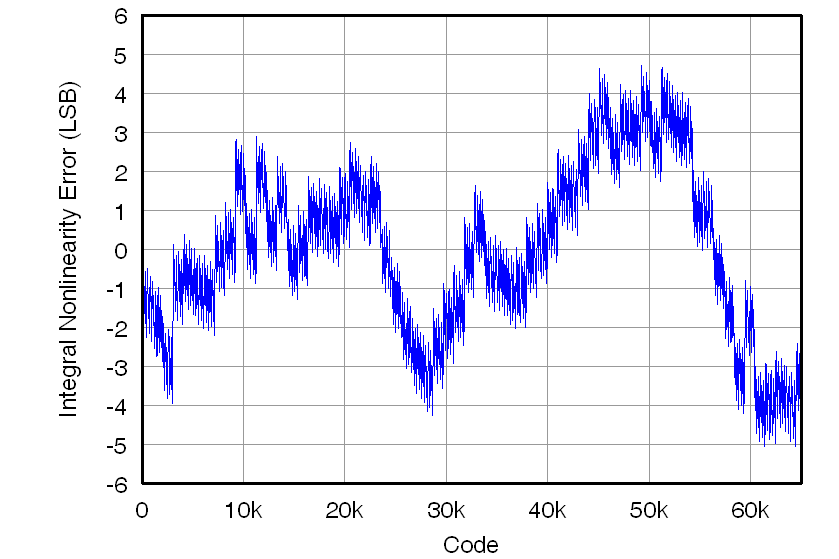 Figure 1. Integral Nonlinearity
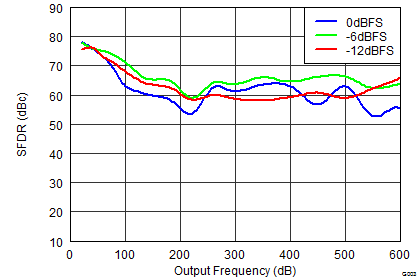 Figure 3. SFDR vs Output Frequency Over Input Scale
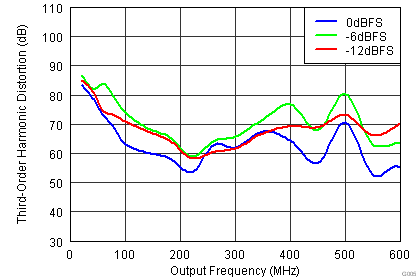 Figure 5. Third Harmonic Distortion vs Output Frequency Over Input Scale
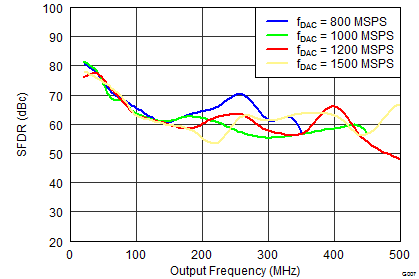 Figure 7. SFDR vs Output Frequency Over fDAC
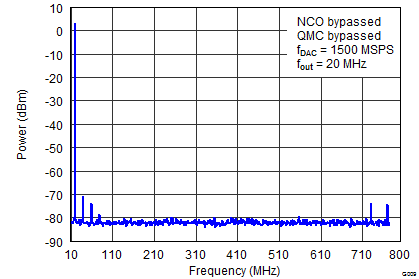 Figure 9. Single-Tone Spectral Plot
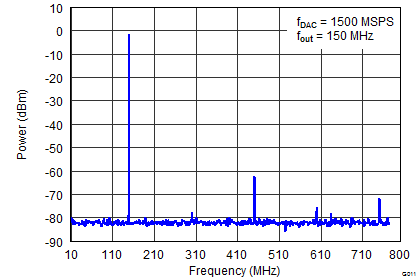 Figure 11. Single-Tone Spectral Plot
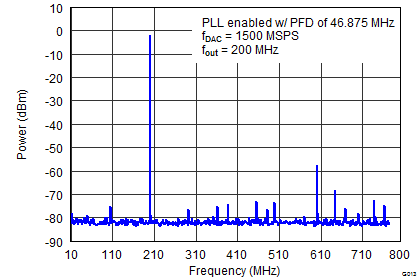 Figure 13. Single-Tone Spectral Plot
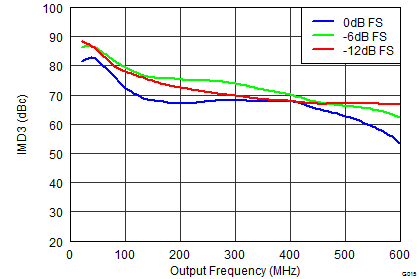 Figure 15. IMD3 vs Output Frequency Over Input Scale
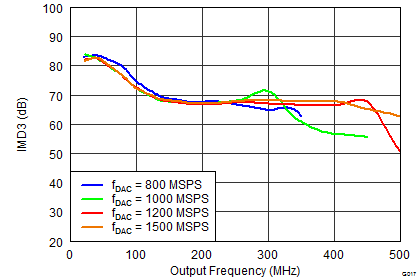 Figure 17. IMD3 vs Output Frequency Over fDAC
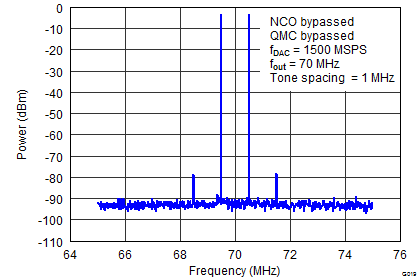 Figure 19. Two-Tone Spectral Plot
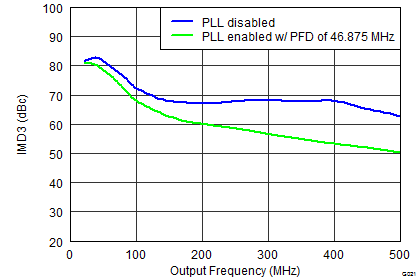 Figure 21. IMD3 vs Output Frequency Over Clocking Options
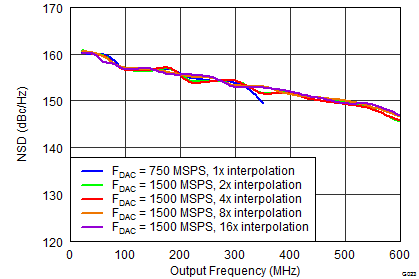 Figure 23. NSD vs Output Frequency Over Interpolation
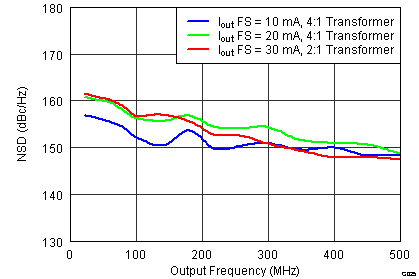 Figure 25. NSD vs Output Frequency Over IOUTFS
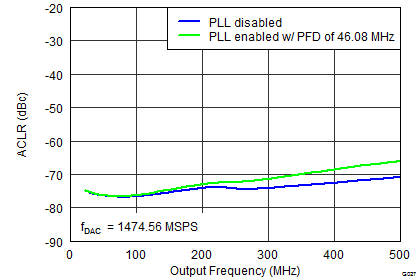 Figure 27. Single-Carrier WCDMA ACLR (Adjacent) vs Output Frequency Over Clocking Options
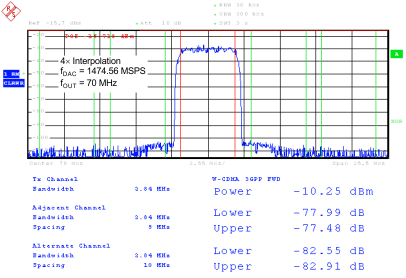 Figure 29. Single-Carrier WCDMA Test Mode1
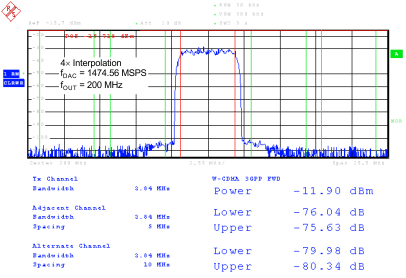
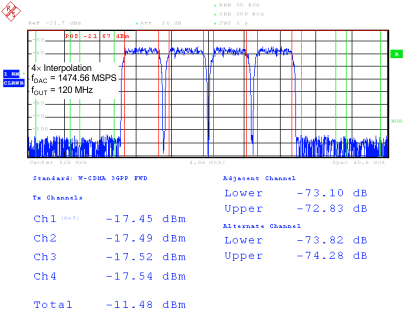 Figure 33. Four-Carrier WCDMA Test Mode1
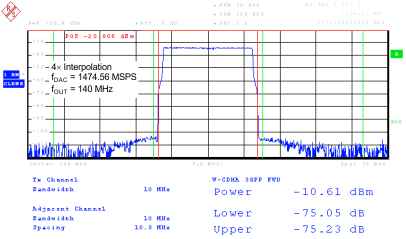 Figure 35. 10-MHz Single-Carrier LTE Test Mode3.1
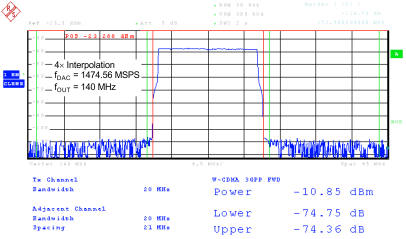 Figure 37. 20-MHz Single-Carrier LTE Test Mode3.1
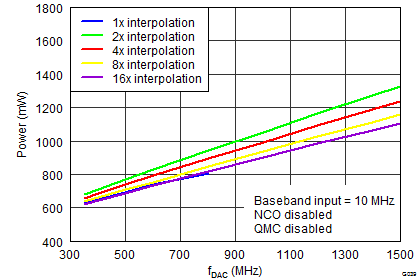 Figure 39. Power vs fDAC Over Interpolation
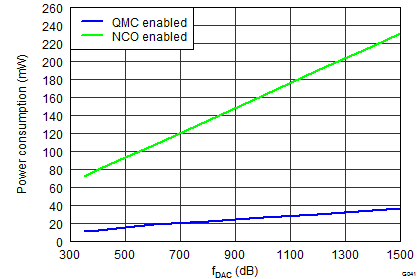 Figure 41. Power Consumption vs fDAC Over Digital Processing Functions
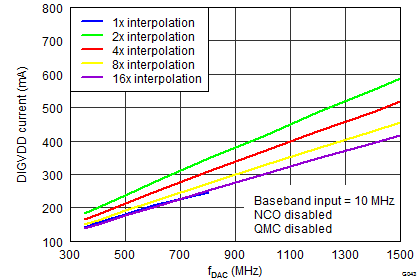 Figure 43. DIGVDD Current vs fDAC Over Interpolation
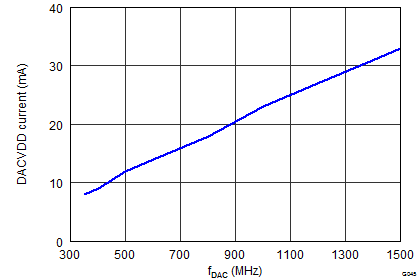 Figure 45. DACVDD Current vs fDAC Over Interpolation
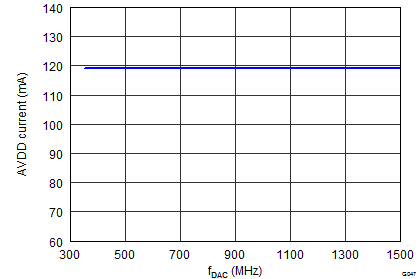 Figure 47. AVDD Current vs fDAC
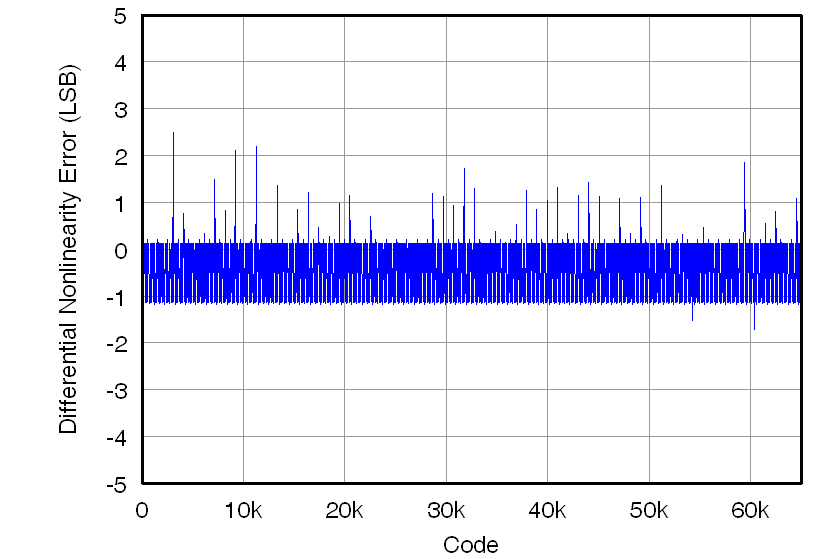 Figure 2. Differential Nonlinearity
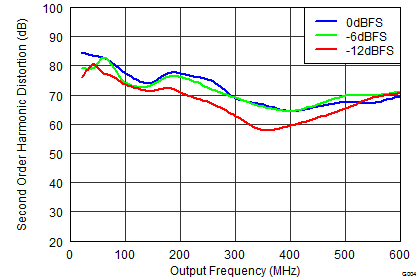 Figure 4. Second-Harmonic Distortion vs Output Frequency Over Input Scale
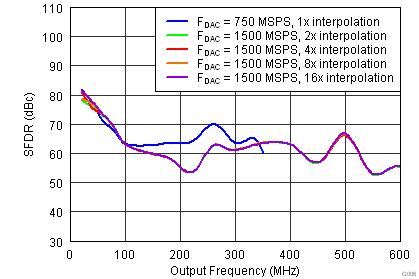 Figure 6. SFDR vs Output Frequency Over Interpolation
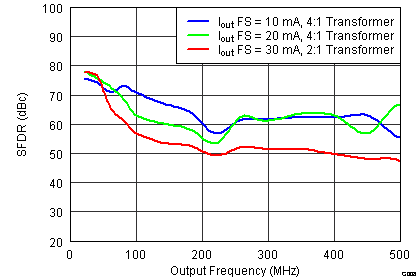 Figure 8. SFDR vs Output Frequency Over IOUTFS
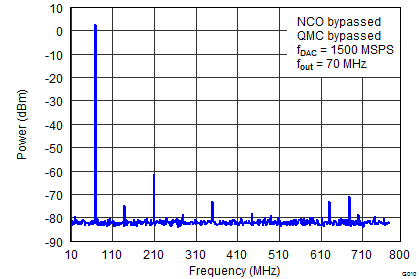 Figure 10. Single-Tone Spectral Plot
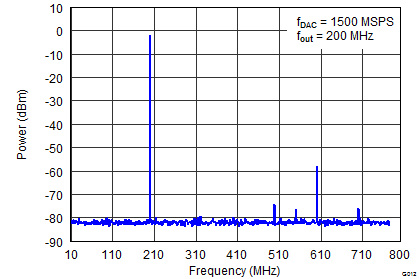 Figure 12. Single-Tone Spectral Plot
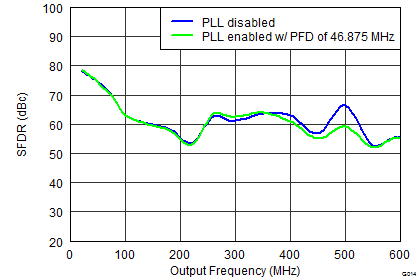 Figure 14. SFDR vs Output Frequency Over Clocking Options
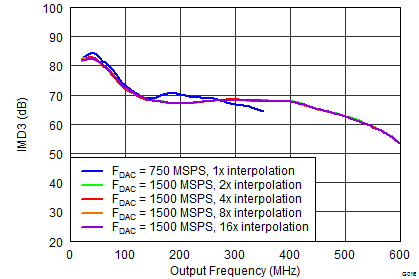 Figure 16. IMD3 vs Output Frequency Over Interpolation
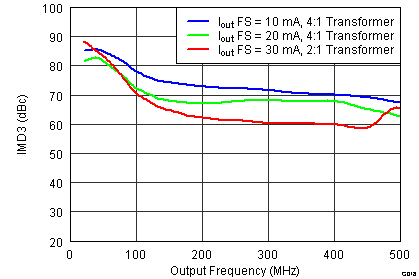 Figure 18. IMD3 vs Output Frequency Over IOUTFS
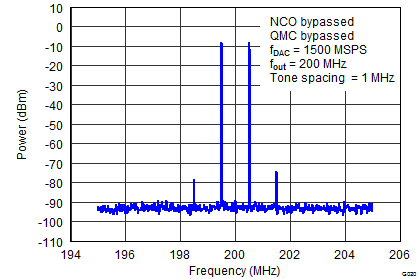 Figure 20. Two-Tone Spectral Plot
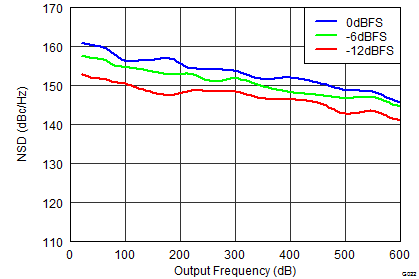 Figure 22. NSD vs Output Frequency Over Input Scale
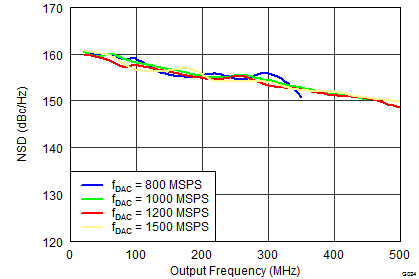 Figure 24. NSD vs Output Frequency Over fDAC
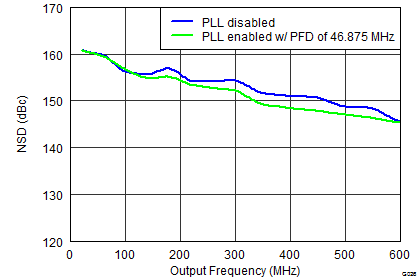 Figure 26. NSD vs Output Frequency Over Clocking Options
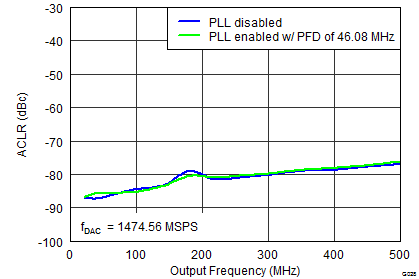 Figure 28. Single-Carrier WCDMA ACLR (Alternate) vs Output Frequency Over Clocking Options
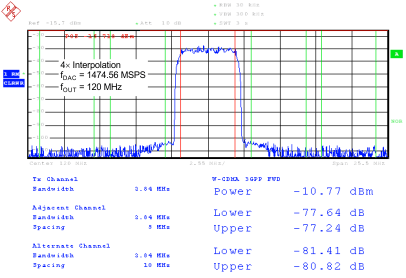 Figure 30. Single-Carrier WCDMA Test Mode1
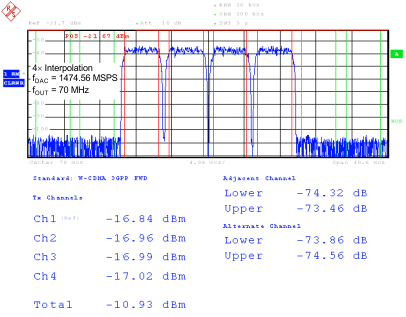 Figure 32. Four-Carrier WCDMA Test Mode1
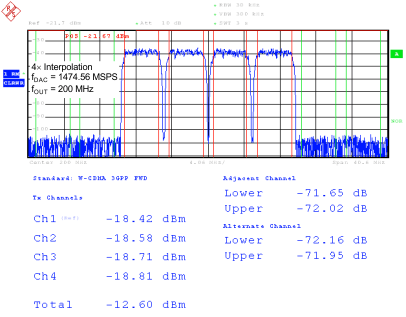 Figure 34. Four-Carrier WCDMA Test Mode1
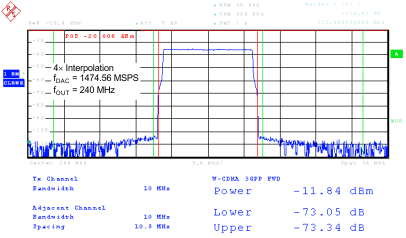 Figure 36. 10-MHz Single-Carrier LTE Test Mode3.1
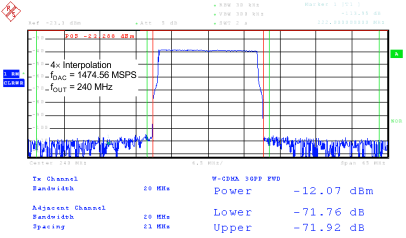 Figure 38. 20-MHz Single-Carrier LTE Test Mode3.1
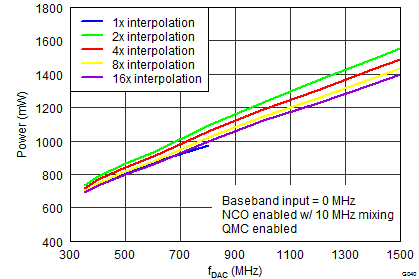 Figure 40. Power vs fDAC Over Interpolation
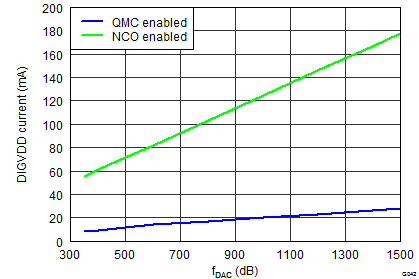 Figure 42. DIGVDD Current vs fDAC Over Digital Processing Functions
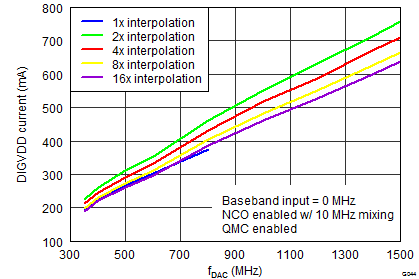 Figure 44. DIGVDD Current vs fDAC Over Interpolation
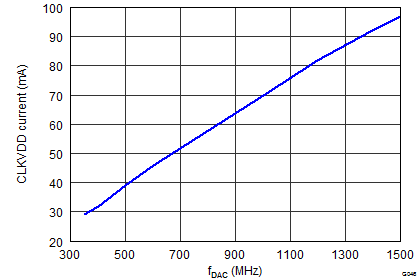 Figure 46. CLKVDD Current vs fDAC
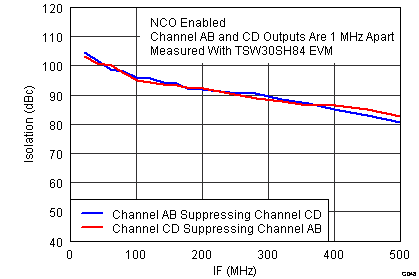 Figure 48. Channel Isolation vs IF