SLLS850D January 2008 – March 2017 TRS3253E
PRODUCTION DATA.
- 1 Features
- 2 Applications
- 3 Description
- 4 Revision History
- 5 Pin Configuration and Functions
-
6 Specifications
- 6.1 Absolute Maximum Ratings
- 6.2 ESD Ratings
- 6.3 Recommended Operating Conditions
- 6.4 Thermal Information
- 6.5 Electrical Characteristics—Power
- 6.6 Electrical Characteristics—Driver
- 6.7 Electrical Characteristics—Receiver
- 6.8 Electrical Characteristics—Status
- 6.9 Switching Characteristics—Driver
- 6.10 Switching Characteristics—Receiver
- 6.11 Switching Characteristics—Power and Status
- 6.12 Typical Characteristics
- 7 Parameter Measurement Information
- 8 Detailed Description
- 9 Application and Implementation
- 10Power Supply Recommendations
- 11Layout
- 12Device and Documentation Support
- 13Mechanical, Packaging, and Orderable Information
6 Specifications
6.1 Absolute Maximum Ratings
over operating free-air temperature range (unless otherwise noted)(1)| MIN | MAX | UNIT | |||
|---|---|---|---|---|---|
| VCC to GND | –0.3 | 6 | V | ||
| VL to GND | –0.3 | VCC + 0.3 | |||
| V+ to GND | –0.3 | 7 | |||
| V– to GND | 0.3 | –7 | |||
| V+ + |V–|(2) | 13 | ||||
| VI | Input voltage | DIN, FORCEOFF, and FORCEON to GND | –0.3 | 6 | V |
| RIN to GND | ±25 | ||||
| VO | Output voltage | DOUT to GND | ±13.2 | V | |
| ROUT to GND | –0.3 | VL + 0.3 | |||
| Continuous power dissipation | TA = 85°C, 32-pin RSM (RθJA = 37.2°C/W)(3) | 1747 | mW | ||
| TJ | Junction temperature | 150 | °C | ||
| Tstg | Storage temperature | –65 | 150 | °C | |
(1) Stresses beyond those listed under Absolute Maximum Ratings may cause permanent damage to the device. These are stress ratings only, which do not imply functional operation of the device at these or any other conditions beyond those indicated under Recommended Operating Conditions. Exposure to absolute-maximum-rated conditions for extended periods may affect device reliability..
(2) V+ and V– can have maximum magnitudes of 7 V, but their absolute difference cannot exceed 13 V.
(3) Maximum power dissipation is a function of TJ(max), RθJA, and TA. The maximum allowable power dissipation at any allowable ambient temperature is PD = (TJ(max) – TA) / RθJA. Operating at the absolute maximum TJ of 150°C can affect reliability.
6.2 ESD Ratings
| VALUE | UNIT | ||||
|---|---|---|---|---|---|
| V(ESD) | Electrostatic discharge | Human body model (HBM), per ANSI/ESDA/JEDEC JS-001(1) | All pins except 17 to 23 and 25 | ±2000 | V |
| Pins 17 to 23 and 25 | ±15000 | ||||
| Charged-device model (CDM), per JEDEC specification JESD22-C101(2) | All pins | ±1500 | |||
| IEC61000-4-2, Contact discharge | Pins 17 to 23 and 25 | ±8000 | |||
| IEC61000-4-2, Air-gap discharge | Pins 17 to 23 and 25 | ±15000 | |||
(1) JEDEC document JEP155 states that 500-V HBM allows safe manufacturing with a standard ESD control process.
(2) JEDEC document JEP157 states that 250-V CDM allows safe manufacturing with a standard ESD control process.
6.3 Recommended Operating Conditions
| MIN | MAX | UNIT | ||||
|---|---|---|---|---|---|---|
| VCC | Supply voltage | 3 | 5.5 | V | ||
| VL | Supply voltage | 1.65 | VCC | V | ||
| Input logic low | DIN, FORCEOFF, FORCEON | VL = 3 V or 5.5 V | 0 | 0.8 | V | |
| VL = 2.3 V | 0 | 0.6 | ||||
| VL = 1.65 V | 0 | 0.5 | ||||
| Input logic high | DIN, FORCEOFF, FORCEON | VL = 5.5 V | 2.4 | VL | V | |
| VL = 3 V | 2 | VL | ||||
| VL = 2.7 V | 1.4 | VL | ||||
| VL = 1.95 V | 1.25 | VL | ||||
| Operating temperature | TRS3253EIRSMR | –40 | 85 | °C | ||
| Receiver input voltage | –25 | 25 | V | |||
6.4 Thermal Information
| THERMAL METRIC(1) | TRS3253E | UNIT | |
|---|---|---|---|
| RSM (VQFN) | |||
| 32 PINS | |||
| RθJA | Junction-to-ambient thermal resistance | 37.2 | °C/W |
| RθJC(top) | Junction-to-case (top) thermal resistance | 30.1 | °C/W |
| RθJB | Junction-to-board thermal resistance | 7.8 | °C/W |
| ψJT | Junction-to-top characterization parameter | 0.4 | °C/W |
| ψJB | Junction-to-board characterization parameter | 7.6 | °C/W |
| RθJC(bot) | Junction-to-case (bottom) thermal resistance | 2.4 | °C/W |
(1) For more information about traditional and new thermal metrics, see the Semiconductor and IC Package Thermal Metrics application report.
6.5 Electrical Characteristics—Power
over operating free-air temperature range, VCC = VL = 3 V to 5.5 V, C1–C4 = 0.1 μF (tested at 3.3 V ± 10%), C1 = 0.047 μF, C2–C4 = 0.33 μF (tested at 5 V ± 10%) (unless otherwise noted)(1)| PARAMETER | TEST CONDITIONS | MIN | TYP(2) | MAX | UNIT | ||
|---|---|---|---|---|---|---|---|
| II | Input leakage current | FORCEOFF, FORCEON | ±0.01 | ±1 | μA | ||
| ICC | Supply current (TA = 25°C) |
Auto-powerdown plus disabled | No load, FORCEOFF and FORCEON at VCC |
0.5 | 1 | mA | |
| Powered off | No load, FORCEOFF at GND | 1 | 10 | μA | |||
| Auto-powerdown plus active | No load, FORCEOFF at VCC, FORCEON at GND, All RIN are open or grounded |
1 | 10 | ||||
(1) Testing supply conditions are C1–C4 = 0.1 μF at VCC = 3.3 V ± 0.15 V; C1–C4 = 0.22 μF at VCC = 3.3 V ± 0.3 V; and C1 = 0.047 μF and C2–C4 = 0.33 μF at VCC = 5 V ± 0.5 V. (See Figure 8)
(2) All typical values are at VCC = 3.3 V or VCC = 5 V, and TA = 25°C.
6.6 Electrical Characteristics—Driver
over operating free-air temperature range, VCC = VL = 3 V to 5.5 V, C1–C4 = 0.1 μF (tested at 3.3 V ± 10%), C1 = 0.047 μF, C2–C4 = 0.33 μF (tested at 5 V ± 10%), TA = TMIN to TMAX (unless otherwise noted)| PARAMETER | TEST CONDITIONS | MIN | TYP(1) | MAX | UNIT | |
|---|---|---|---|---|---|---|
| VOH | Output voltage swing | All driver outputs loaded with 3 kΩ to ground, VCC= 3.1V to 5.5V | ±5 | ±5.4 | V | |
| rO | Output resistance | VCC = V+ = V– = 0, Driver output = ±2 V | 300 | 10M | Ω | |
| IOS | Output short-circuit current | VT_OUT = 0 | ±60 | mA | ||
| IOZ | Output leakage current | VT_OUT = ±12 V, FORCEOFF = GND, VCC = 3 V to 3.6 V |
±25 | μA | ||
| VT_OUT = ±12 V, FORCEOFF = GND, VCC = 4.5 V to 5.5 V |
||||||
| Driver input hysteresis | 0.5 | V | ||||
| Input leakage current | DIN, FORCEOFF, FORCEON | ±0.01 | ±1 | μA | ||
(1) Typical values are at VCC = VL = 3.3 V, TA = 25°C
6.7 Electrical Characteristics—Receiver
over operating free-air temperature range, VCC = VL = 3 V to 5.5 V, C1–C4 = 0.1 μF (tested at 3.3 V ± 10%), C1 = 0.047 μF, C2–C4 = 0.33 μF (tested at 5 V ± 10%), TA = TMIN to TMAX (unless otherwise noted)| PARAMETER | TEST CONDITIONS | MIN | TYP(1) | MAX | UNIT | ||
|---|---|---|---|---|---|---|---|
| Ioff | Output leakage current | ROUT, receivers disabled | ±0.05 | ±10 | μA | ||
| VOL | Output voltage low | IOUT = 1.6 mA | 0.4 | V | |||
| VOH | Output voltage high | IOUT = –1 mA | VL – 0.6 | VL – 0.1 | V | ||
| VIT– | Input threshold low | TA = 25°C | VL = 5 V | 0.8 | 1.2 | V | |
| VL = 3.3 V | 0.6 | 1.5 | |||||
| VIT+ | Input threshold high | TA = 25°C | VL = 5 V | 1.8 | 2.4 | V | |
| VL = 3.3 V | 1.5 | 2.4 | |||||
| Vhys | Input hysteresis | 0.5 | V | ||||
| Input resistance | TA = 25°C | 3 | 5 | 7 | kΩ | ||
(1) Typical values are at VCC = VL = 3.3 V, TA = 25°C
6.8 Electrical Characteristics—Status
over recommended ranges of supply voltage and operating free-air temperature (unless otherwise noted)| PARAMETER | TEST CONDITIONS | MIN | MAX | UNIT | |
|---|---|---|---|---|---|
| VIT+(valid) | Receiver input threshold for INVALID high-level output voltage |
FORCEON = GND, FORCEOFF = VL | 2.7 | V | |
| VIT–(valid) | Receiver input threshold for INVALID high-level output voltage |
FORCEON = GND, FORCEOFF = VL | –2.7 | V | |
| VT(invalid) | Receiver input threshold for INVALID low-level output voltage |
FORCEON = GND, FORCEOFF = VL | –0.3 | 0.3 | V |
| VOH | INVALID high-level output voltage | IOH = –1 mA, FORCEON = GND, FORCEOFF = VL |
VL – 0.6 | V | |
| VOL | INVALID low-level output voltage | IOL = 1.6 mA, FORCEON = GND, FORCEOFF = VL |
0.4 | V | |
6.9 Switching Characteristics—Driver
over operating free-air temperature range, VCC = VL = 3 V to 5.5 V, C1–C4 = 0.1 μF (tested at 3.3 V ± 10%), C1 = 0.047 μF, C2–C4 = 0.33 μF (tested at 5 V ± 10%), TA = TMIN to TMAX (unless otherwise noted)| PARAMETER | TEST CONDITIONS | MIN | TYP(1) | MAX | UNIT | ||
|---|---|---|---|---|---|---|---|
| Maximum data rate | RL = 3 kΩ, CL = 200 pF, one driver switching | 1000 | kbps | ||||
| Time-to-exit powerdown | |VT_OUT| > 3.7 V | 100 | μs | ||||
| |tPHL – tPLH| | Driver skew(2) | 100 | ns | ||||
| Transition-region slew rate |
VCC = 3.3 V, TA = 25°C, RL = 3 kΩ to 7 kΩ, Measured from 3 V to –3 V or –3 V to 3 V |
CL = 150 pF to 1000 pF | 15 | 150 | V/μs | ||
(1) Typical values are at VCC = VL = 3.3 V, TA = 25°C.
(2) Driver skew is measured at the driver zero crosspoint.
6.10 Switching Characteristics—Receiver
over operating free-air temperature range, VCC = VL = 3 V to 5.5 V, C1–C4 = 0.1 μF (tested at 3.3 V ± 10%), C1 = 0.047 μF, C2–C4 = 0.33 μF (tested at 5 V ± 10%), TA = TMIN to TMAX (unless otherwise noted)| PARAMETER | TEST CONDITIONS | MIN | TYP(1) | MAX | UNIT | |
|---|---|---|---|---|---|---|
| tPHL | Receiver propagation delay | Receiver input to receiver output, CL = 150 pF | 0.15 | μs | ||
| tPLH | 0.15 | |||||
| tPHL – tPLH | Receiver skew | 50 | ns | |||
| ten | Receiver output enable time | From FORCEOFF | 200 | |||
| tdis | Receiver output disable time | From FORCEOFF | 200 | |||
(1) Typical values are at VCC = VL = 3.3 V, TA = 25°C.
6.11 Switching Characteristics—Power and Status
over recommended ranges of supply voltage and operating free-air temperature (unless otherwise noted) (see Figure 7)| PARAMETER | MIN | TYP(1) | MAX | UNIT | |
|---|---|---|---|---|---|
| tvalid | Propagation delay time, low- to high-level output | 0.1 | μs | ||
| tinvalid | Propagation delay time, high- to low-level output | 50 | |||
| ten | Supply enable time | 25 | |||
| tdis | Receiver or driver edge to auto-powerdown plus | 15 | 30 | 60 | s |
(1) All typical values are at VCC = VL = 3.3 V and TA = 25°C.
6.12 Typical Characteristics
VCC = 3.3 V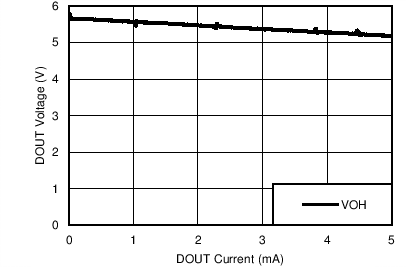
Other Drivers 3-kΩ Load
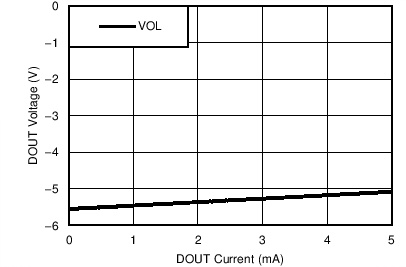
Other Drivers 3-kΩ Load