SLAA281C November 2005 – August 2018 MSP430F1610 , MSP430F1610 , MSP430F1611 , MSP430F1611 , MSP430F1612 , MSP430F1612 , MSP430G2001 , MSP430G2001 , MSP430G2101 , MSP430G2101 , MSP430G2111 , MSP430G2111 , MSP430G2121 , MSP430G2121 , MSP430G2131 , MSP430G2131 , MSP430G2201 , MSP430G2201 , MSP430G2201-Q1 , MSP430G2201-Q1 , MSP430G2211 , MSP430G2211 , MSP430G2221 , MSP430G2221 , MSP430G2231 , MSP430G2231 , MSP430G2231-Q1 , MSP430G2231-Q1
-
Interfacing MSP430™ MCUs With MMC or SD Flash Memory Cards
- Trademarks
- 1 Hardware Description
- 2 Software Description
- 3
Function Description
- 3.1 char mmcInit (void);
- 3.2 char mmcping(void);
- 3.3 void mmcSendCmd (const char cmd, unsigned long data, const char crc);
- 3.4 char mmcGoIdle();
- 3.5 char mmcSetBlockLength (const unsigned long);
- 3.6 char mmcReadBlock(const unsigned long address, const unsigned long count, unsigned char *pBuffer);
- 3.7 char mmcWriteBlock (const unsigned long address, const unsigned long count, unsigned char *pBuffer);
- 3.8 char mmcReadRegister (const char cmd_register, const unsigned char length, unsigned char *pBuffer);
- 3.9 unsigned long mmcReadCardSize(void);
- 4 References
- Revision History
1 Hardware Description
The MSP430F1612 communicates with the MMC or SD card through the SPI interface. SPI is a fast and efficient protocol that allows for simultaneous bidirectional data transfer. Serial data is transmitted and received by the MSP430 MCU using the USART module in SPI mode. Figure 1 shows the hardware interconnection for the master-slave configuration operating on a single supply voltage.
The associated MSP430F1612 pins P5.3 and P5.4 are configured as GPIO to control the chip-select pin and read the memory card detect signal. The USART1 hardware peripheral of the MSP430F1612 is configured in the 3-pin SPI mode. Pins P5.1, P5.2, and P5.3 of the MSP430 MCU provide the SIMO1, SOMI1, and UCLK1 interface to the MMC card.
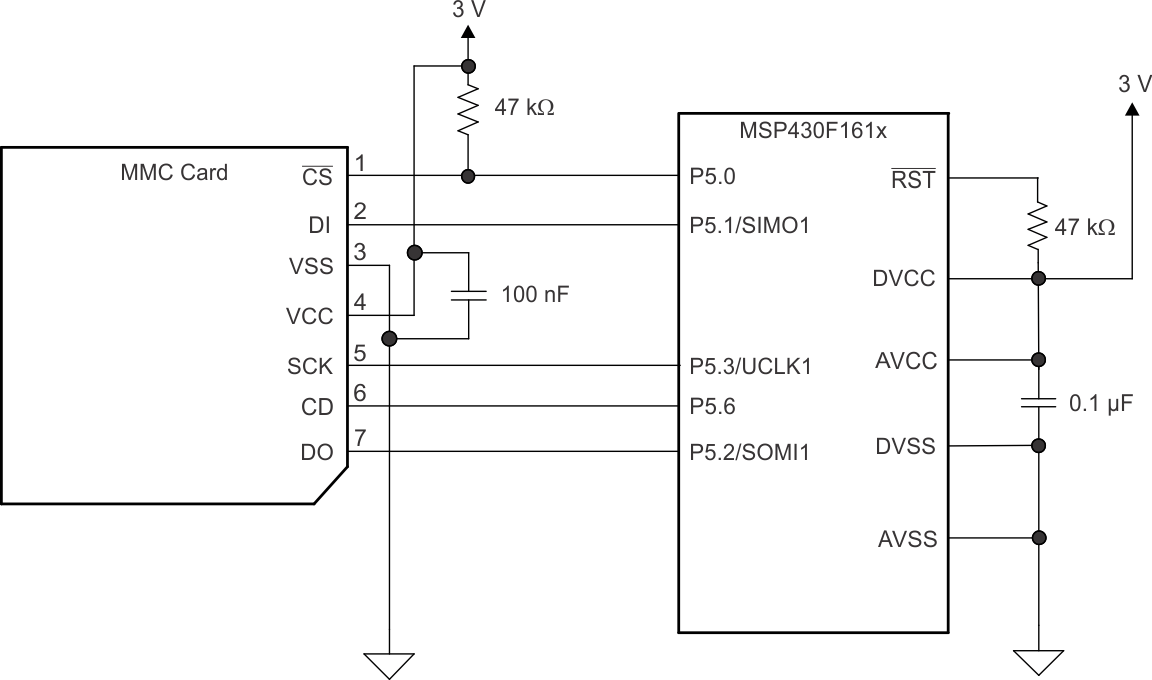 Figure 1. Connection Between MSP430 MCU and MMC Card