SFFS119 March 2021 TS5A23157-Q1
4 Pin Failure Mode Analysis (Pin FMA)
This section provides a Failure Mode Analysis (FMA) for the pins of the TS5A23157-Q1. The failure modes covered in this document include the typical pin-by-pin failure scenarios:
- Pin short-circuited to Ground (see Table 4-2)
- Pin open-circuited (see Table 4-3)
- Pin short-circuited to an adjacent pin (see Table 4-4)
- Pin short-circuited to supply (see Table 4-5)
Table 4-2 through Table 4-5 also indicate how these pin conditions can affect the device as per the failure effects classification in Table 4-1.
| Class | Failure Effects |
|---|---|
| A | Potential device damage that affects functionality |
| B | No device damage, but loss of functionality |
| C | No device damage, but performance degradation |
| D | No device damage, no impact to functionality or performance |
Figure 4-1 shows the TS5A23157-Q1 pin diagram. For a detailed description of the device pins please refer to the Pin Configuration and Functions section in the TS5A23157-Q1 data sheet.
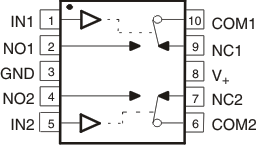 Figure 4-1 Pin Diagram
| Pin Name | Pin No. | Description of Potential Failure Effect(s) | Failure Effect Class |
|---|---|---|---|
|
IN1 |
1 |
IN stuck low. Cannot control switch states. |
B |
|
NO1 |
2 |
Corruption of analog signal. If there is no limiting resistor in the switch path device damage is possible. |
A |
|
GND |
3 |
No effect, normal operation. |
D |
|
NO2 |
4 |
Corruption of analog signal. If there is no limiting resistor in the switch path device damage is possible. |
A |
|
IN2 |
5 |
IN stuck low. Cannot control switch states. |
B |
|
COM2 |
6 |
Corruption of analog signal. If there is no limiting resistor in the switch path device damage is possible. |
A |
|
NC2 |
7 |
Corruption of analog signal. If there is no limiting resistor in the switch path device damage is possible. |
A |
|
V+ |
8 |
Device unpowered. Device not functional. Observe that the absolute maximum ratings for all pins of the device are met, otherwise device damage is possible. |
A |
|
NC1 |
9 |
Corruption of analog signal. If there is no limiting resistor in the switch path device damage is possible. |
A |
|
COM1 |
10 |
Corruption of analog signal. If there is no limiting resistor in the switch path device damage is possible. |
A |
| Pin Name | Pin No. | Description of Potential Failure Effect(s) | Failure Effect Class |
|---|---|---|---|
| IN1 | 1 | Loss of control of IN pin. Switch in undefined state. |
B |
| NO1 | 2 | Corruption of analog signal. |
B |
| GND | 3 | Device unpowered. Device not functional. Observe that the absolute maximum ratings for all pins of the device are met, otherwise device damage is possible. |
A |
| NO2 | 4 | Corruption of analog signal. |
B |
| IN2 | 5 | Loss of control of IN pin. Switch in undefined state. |
B |
| COM2 | 6 | Corruption of analog signal. |
B |
| NC2 | 7 | Corruption of analog signal. |
B |
| V+ | 8 | Device unpowered. Device not functional. Observe that the absolute maximum ratings for all pins of the device are met, otherwise device damage is possible. |
A |
| NC1 | 9 | Corruption of analog signal. |
B |
| COM1 | 10 | Corruption of analog signal. |
B |
| Pin Name | Pin No. | Shorted to | Description of Potential Failure Effect(s) | Failure Effect Class |
|---|---|---|---|---|
| IN1 | 1 | NO1 | Loss of control of IN pin. Switch in undefined state. Possible corruption of analog signal. |
B |
| NO1 | 2 | COM1 | Corruption of analog signal. If there is no limiting resistor in the switch path device damage is possible. |
A |
| COM1 | 3 | NO2 | Corruption of analog signal. If there is no limiting resistor in the switch path device damage is possible. |
A |
| NO2 | 4 | IN2 | Loss of control of IN pin. Switch in undefined state. Possible corruption of analog signal. |
B |
| IN2 | 5 | COM2 | Not considered, Corner pin. |
D |
| COM2 | 6 | NC2 | Corruption of analog signal. |
B |
| NC2 | 7 | V+ | Corruption of analog signal. If there is no limiting resistor in the switch path device damage is possible. |
A |
| V+ | 8 | NC1 | Corruption of analog signal. If there is no limiting resistor in the switch path device damage is possible. |
A |
| NC1 | 9 | COM1 | Corruption of analog signal. |
B |
| COM1 | 10 | IN1 | Not considered, Corner pin. |
D |
| Pin Name | Pin No. | Description of Potential Failure Effect(s) | Failure Effect Class |
|---|---|---|---|
| IN1 | 1 | IN stuck to VDD. Cannot control switch states. |
B |
| NO1 | 2 | Corruption of analog signal. If there is no limiting resistor in the switch path device damage is possible. |
A |
| COM1 | 3 | Device unpowered. Device not functional. Observe that the absolute maximum ratings for all pins of the device are met, otherwise device damage is possible. |
A |
| NO2 | 4 | Corruption of analog signal. If there is no limiting resistor in the switch path device damage is possible. |
A |
| IN2 | 5 | IN stuck to VDD. Cannot control switch states. |
B |
| COM2 | 6 | Corruption of analog signal. If there is no limiting resistor in the switch path device damage is possible. |
A |
| NC2 | 7 | Corruption of analog signal. If there is no limiting resistor in the switch path device damage is possible. |
A |
| V+ | 8 | No effect, normal operation |
D |
| NC1 | 9 | Corruption of analog signal. If there is no limiting resistor in the switch path device damage is possible |
A |
| COM1 | 10 | Corruption of analog signal. If there is no limiting resistor in the switch path device damage is possible |
A |