ZHCSKS3D February   2020  – May 2025 TLV761

PRODUCTION DATA  

  1.   1
  2. 特性
  3. 应用
  4. 说明
  5. Pin Configuration and Functions
  6. Specifications
    1. 5.1 Absolute Maximum Ratings
    2. 5.2 ESD Ratings
    3. 5.3 Recommended Operating Conditions
    4. 5.4 Thermal Information
    5. 5.5 Electrical Characteristics
    6. 5.6 Typical Characteristics
  7. Detailed Description
    1. 6.1 Overview
    2. 6.2 Functional Block Diagram
    3. 6.3 Feature Description
      1. 6.3.1 Dropout Voltage
      2. 6.3.2 Foldback Current Limit
      3. 6.3.3 Undervoltage Lockout (UVLO)
      4. 6.3.4 Thermal Shutdown
    4. 6.4 Device Functional Modes
      1. 6.4.1 Device Functional Mode Comparison
      2. 6.4.2 Normal Operation
      3. 6.4.3 Dropout Operation
  8. Application and Implementation
    1. 7.1 Application Information
      1. 7.1.1 Recommended Capacitor Types
      2. 7.1.2 Input and Output Capacitor Requirements
      3. 7.1.3 Reverse Current
      4. 7.1.4 Power Dissipation (PD)
      5. 7.1.5 Estimating Junction Temperature
    2. 7.2 Typical Application
      1. 7.2.1 Design Requirements
      2. 7.2.2 Detailed Design Procedure
      3. 7.2.3 Application Curves
    3. 7.3 Best Design Practices
    4. 7.4 Power Supply Recommendations
    5. 7.5 Layout
      1. 7.5.1 Layout Guidelines
      2. 7.5.2 Layout Examples
  9. Device and Documentation Support
    1. 8.1 Device Support
      1. 8.1.1 Device Nomenclature
    2. 8.2 Documentation Support
      1. 8.2.1 Related Documentation
    3. 8.3 接收文档更新通知
    4. 8.4 支持资源
    5. 8.5 Trademarks
    6. 8.6 静电放电警告
    7. 8.7 术语表
  10. Revision History
  11. 10Mechanical, Packaging, and Orderable Information

封装选项

机械数据 (封装 | 引脚)
散热焊盘机械数据 (封装 | 引脚)
订购信息

Typical Characteristics

at operating temperature TJ = 25°C, VIN = VOUT(NOM) + 1.5 V or 2.5 V (whichever is greater), IOUT = 10 mA, CIN = 1.0 µF, and COUT = 1.0 µF (unless otherwise noted)
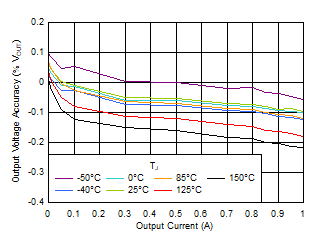
TLV761 VOUT
            Accuracy vs IOUT
For VIN ≥ 3.0 V
Figure 5-1 VOUT Accuracy vs IOUT
TLV761 IQ
            vs Temperature
IOUT = 0 mA
Figure 5-3 IQ vs Temperature
TLV761 IGND
            vs IOUT
For VIN ≥ 3.0 V
Figure 5-5 IGND vs IOUT
TLV761 IOUT
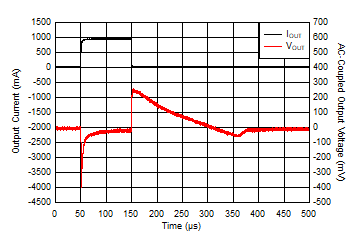
            Transient From 1 mA to 1 A
VIN = 5 V, VOUT = 3.3 V, ramp rate = 0.5 A/µs
Figure 5-7 IOUT Transient From 1 mA to 1 A
TLV761 VIN
            Transient in Dropout From 4 V to 13 V
VIN = 5 V VOUT = 3.3 V, IOUT = 1 A, VIN ramp rate = 0.6 V/µs
Figure 5-9 VIN Transient in Dropout From 4 V to 13 V
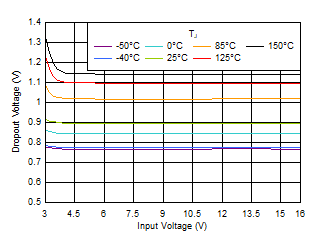
TLV761 VDO
            vs VIN
IOUT = 1.0 A
Figure 5-11 VDO vs VIN
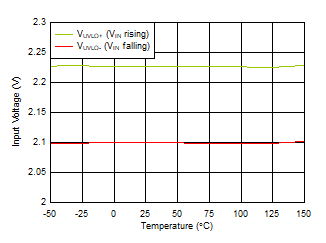
TLV761 UVLO Thresholds
            vs Temperature
 
Figure 5-13 UVLO Thresholds vs Temperature
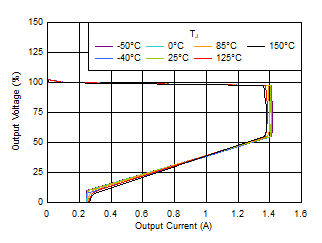
TLV761 Foldback
            Current Limit vs Temperature
For VIN ≥ 3.0 V
Figure 5-15 Foldback Current Limit vs Temperature
TLV761 PSRR vs
              IOUT
VOUT = 1.8 V, VIN = 3.3 V
Figure 5-17 PSRR vs IOUT
TLV761 Output Noise
              (Vn) vs VOUT
IOUT = 0.1 A, RMS noise BW = 10 Hz to 100 kHz
Figure 5-19 Output Noise (Vn) vs VOUT
TLV761 VOUT
            Accuracy vs VIN
IOUT = 10 mA
Figure 5-2 VOUT Accuracy vs VIN
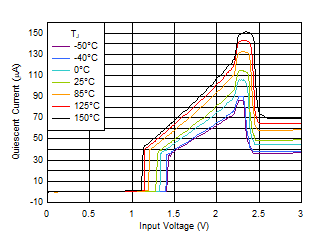
TLV761 IQ
            Increase Below Minimum VIN
IOUT = 0 mA
Figure 5-4 IQ Increase Below Minimum VIN
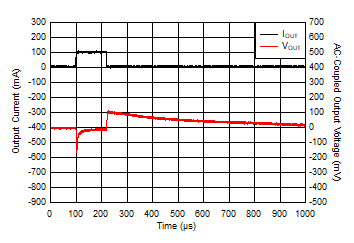
TLV761 IOUT
            Transient From 0 mA to 100 mA
VIN = 5 V, VOUT = 3.3 V, ramp rate = 0.4 A/µs
Figure 5-6 IOUT Transient From 0 mA to 100 mA
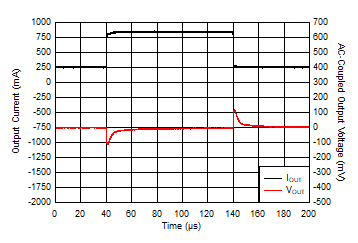
TLV761 IOUT
            Transient From 250 mA to 850 mA
VIN = 5 V, VOUT = 3.3 V, ramp rate = 0.8 A/µs
Figure 5-8 IOUT Transient From 250 mA to 850 mA
TLV761 VIN
            Transient From 5 V to 16 V
VOUT = 3.3 V, IOUT = 33 µA, VIN ramp rate = 1.6 V/µs
Figure 5-10 VIN Transient From 5 V to 16 V
TLV761 VDO
            vs VIN
IOUT = 0.8 A
Figure 5-12 VDO vs VIN
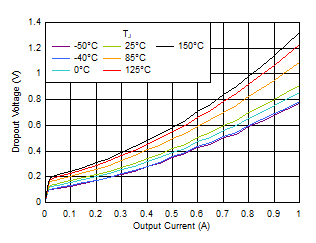
TLV761 VDO
            vs IOUT
For VIN ≥ 3.0 V
Figure 5-14 VDO vs IOUT
TLV761 Foldback
            Current Limit vs Temperature
 
Figure 5-16 Foldback Current Limit vs Temperature
TLV761 PSRR vs
              VIN
VOUT = 1.8 V, IOUT = 0.55 A
Figure 5-18 PSRR vs VIN
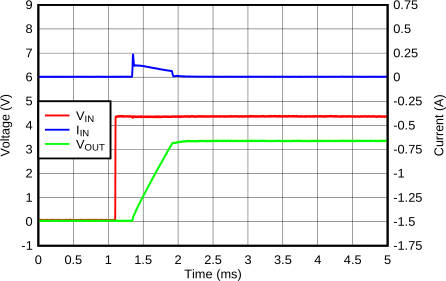
TLV761  Inrush Current
            With 22 µF at COUT
IOUT = 0.1 A, COUT = 22 µF
Figure 5-20 Inrush Current With 22 µF at COUT